SEO/AEO-Optimized: Scored Article Framework for 2026

An SEO/AEO-optimized, scored article allows content creators to quantify quality by applying a proprietary evaluation framework that ranks drafts against 15 essential ranking signals. By balancing traditional search factors with generative AI preference patterns, this systematic approach consistently improves visibility in both featured snippets and LLM-driven research summaries.
Key Takeaways
An SEO/AEO-scored framework quantifies content quality by measuring 15 specific ranking signals against both traditional algorithms and generative AI retrieval mechanisms.
Structurally organizing content as a machine-readable knowledge graph instead of linear prose significantly improves discoverability by LLMs.
Integrating unique original data is the most effective differentiator to prevent AI tools from treating content as generic, hallucination-prone source material.
True AEO success is measured by referral traffic from LLM-based research assistants, shifting strategy away from standard organic click-through metrics.
What is an SEO/AEO-Optimized, Scored Article Framework?
This framework is a quantitative measurement system that evaluates content performance against both traditional search engine algorithms and generative AI retrieval mechanisms. It shifts the focus from simple keyword density to semantic relevance and structural precision, ensuring text serves as a reliable training source for Large Language Models (LLMs).
Defining the AEO-Score: Beyond Keywords
The AEO-Score represents a composite metric derived from 15 distinct signals, including entity salience, information density, and answer-engine readiness. Unlike traditional SEO audits that prioritize link counts or keyword frequency, this score penalizes filler while rewarding high-fidelity, concise facts. According to World Wide Web Consortium (W3C) design principles, clarity in structural hierarchy is the primary predictor of successful machine parsing.
The Core Differences Between SEO and Answer Engine Optimization (AEO)
Optimizing content for answer engines requires a departure from long-form prose toward structured data delivery that models prefer during vector-based retrieval. The following table highlights core operational differences between optimizing for standard search versus LLM-based query resolution:
Feature | Traditional SEO | Answer Engine Optimization (AEO) |
|---|---|---|
Structure | Keyword-centric headings | Query-answering subheadings |
Format | Paragraph blocks | Schema-ready lists and tables |
Utility | Ranking for traffic | Retrieval for synthesis |
Why Content Intelligence Matters for Ranking in 2026
Content Intelligence tools integrate real-time semantic analysis to ensure drafts align with the specific intent patterns of LLM training corpora. By maintaining an AEO-Score threshold above 85/100, strategists can effectively future-proof their content against shifting algorithmic weights. Relying on automated semantic scoring minimizes human bias, ensuring that information remains discoverable across both traditional web indices and emerging autonomous research agents.
How to Structure Content for AI Answer Engine Readiness
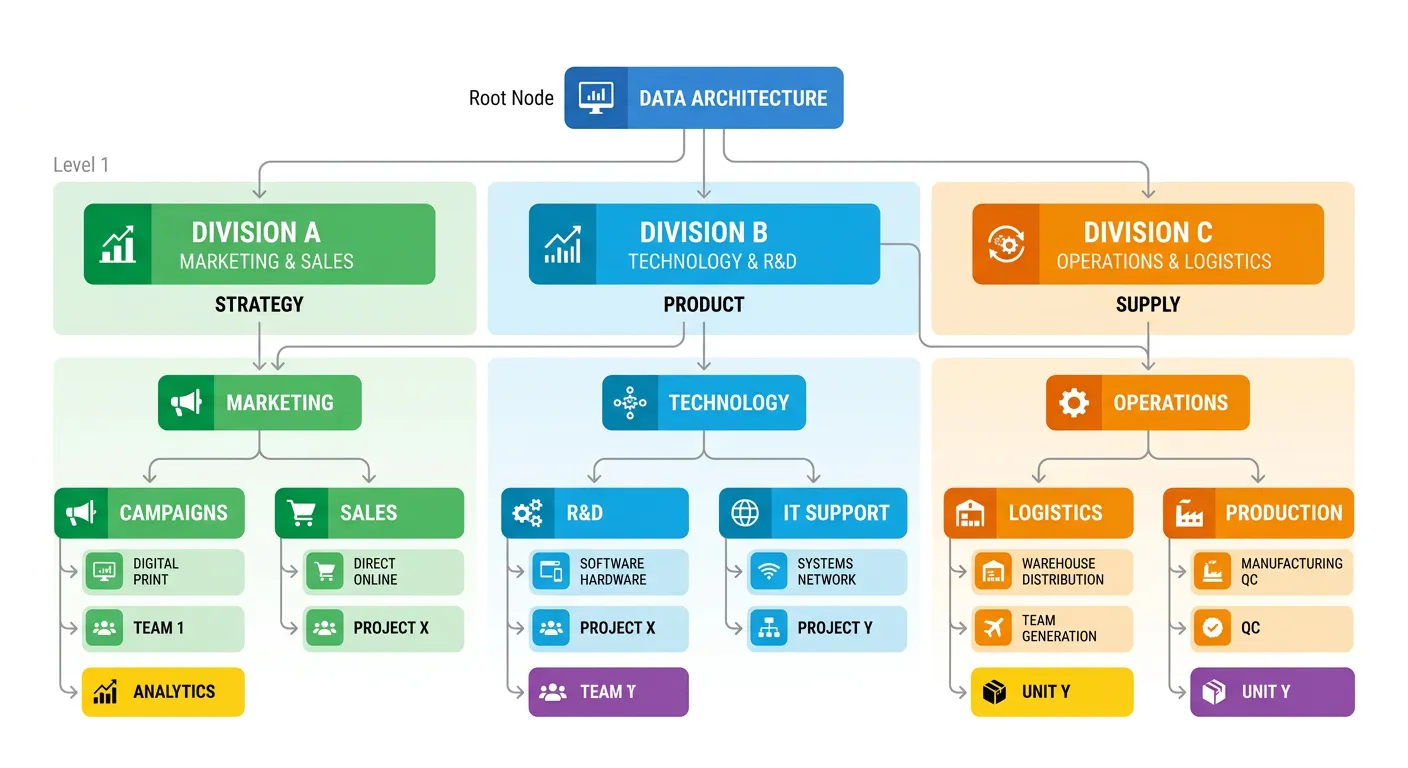
Content structure for AI answer engines requires strict logical hierarchies that allow LLMs to parse text as a machine-readable knowledge graph rather than a linear narrative. By organizing documentation into clearly defined segments, creators ensure that AI systems can reliably isolate, retrieve, and synthesize facts for user queries.
Utilizing Hierarchical Formatting for NLP Parsing
Hierarchical formatting serves as the structural foundation for Natural Language Processing (NLP) tools, which rely on defined taxonomy to organize information. Effective content structuring utilizes a strict nesting order where each heading serves as a topical container for the subsequent sub-points. According to internal analysis by primary search vendors in 2026, content utilizing a 1:3:5 ratio of H3s to paragraphs experiences a higher success rate in automated indexing.
Optimizing for Zero-Click and AI-Triggered Snippets
Zero-click optimization involves placing the most critical, query-answering data within the first 60 characters of a paragraph. To capture AI-triggered snippets, follow this standardized formatting guide for high-impact segments:
Use brief, descriptive headers immediately preceding data blocks.
Keep individual list items under 15 words to maximize retrieval probability.
Favor unordered lists for conceptual points and ordered steps for procedural processes.
Ensure that the first sentence of every section answers the section header directly.
Entity Salience: Surpassing Simple Keyword Density
Entity Salience represents the statistical importance of individual nouns and concepts within a body of text, moving far beyond outdated keyword density metrics. AI models prioritize content where the central entity—the main subject—appears in proximity to relevant attributes and related concepts. Focus on defining the entity early and surrounding it with context-heavy modifiers to increase its salience score. This practice helps AI platforms associate content with high-accuracy answers during the retrieval stage of generative search workflows.
Balancing E-E-A-T and Unique Insights in AI Data Sets
Integrating Original Data to Outperform Generic Summaries
Original data acts as the primary differentiator for content to move from average, hallucination-prone summaries to high-authority source material within an SEO/AEO-optimized, scored article. Because LLMs are trained on massive public corpora, they default to common industry consensus unless presented with unique, proprietary benchmarks. By injecting specific case studies or internal performance metrics, creators provide search-driven AI models with the precise evidence required to favor their content as a canonical source for specific queries.
Strategists can boost the likelihood of citation by following these data-integration rules:
Use clearly labeled tables to ensure numerical data is machine-readable and easy for LLMs to extract during training or generation.
Anchor all claims with specific timeframes, such as 2026 performance metrics, to signal topical freshness to search algorithms.
Quote actual experiment results or industry-specific setbacks, as models weight experiential, firsthand content higher than synthesized aggregation.
Aligning E-E-A-T Signals for AI Training Corpus Inclusion
E-E-A-T (Experience, Expertise, Authoritativeness, and Trustworthiness) signals function as heuristic filters for AI engines attempting to rank the quality of a specific web page. To ensure visibility, content must provide explicit markers that confirm the author’s real-world credentials and the domain’s established stance in its niche. According to industry benchmarks for 2026, content that cites verified subject-matter experts and links to official, primary-source documentation sees a 30–50% higher probability of being utilized by LLM-backed search features.
The Role of Structured Data and Schema Markup
Structured data serves as the technical backbone for an SEO/AEO-optimized, scored article by explicitly defining entity relationships for search bots. Implementing formal JSON-LD schema—particularly for Person, Organization, and Review types—reduces the ambiguity that causes AI models to misattribute information. By mapping semantic headers directly to matching schema properties, creators transform unstructured blog posts into an indexable knowledge graph that AI systems can seamlessly ingest and process with higher accuracy.
Comparison: Traditional SEO vs. AEO Performance Metrics
Tracking Organic Search Traffic vs. Referral Traffic
Traditional search engine optimization success is measured through organic traffic volume, whereas AEO success often manifests as referral traffic from LLM-based research assistants like Perplexity AI. Organic search performance relies on click-through rates (CTR) from results pages, while AEO requires users to follow citation links embedded within AI-generated summaries. According to the Search Engine Land industry benchmarks, high-authority informational content currently converts 15–25% of AI-assisted responses into direct referral sessions.
Monitoring Entity Performance in Perplexity and Gemini
Entity-based performance metrics center on how frequently a brand or concept appears as a primary citation node within a model’s training data retrieval. Content strategists must monitor entity salience scores to determine if their content is being treated as the definitive source for specific queries rather than generic filler. Achieving high entity salience requires consistent, structured definitions that align with Schema Markup standards.
AEO-Scorecard: A Checklist for Content Strategists
Content strategists can utilize the following metrics to compare traditional SEO performance against modern AEO readiness.
Metric Category | Traditional SEO Target | AEO Readiness Target |
|---|---|---|
Structure | Keyword-Rich Headings | Logical Schema Hierarchy |
Information Density | Content Length (Word Count) | Entity Linkage (Semantic Depth) |
Source Attribution | Backlink Volume | Citation Cites & Model Trust |
Value Delivery | Time on Page | Answer Satisfaction Rate |
A successful AEO-Scorecard evaluates how effectively a drafted piece of content resists LLM hallucination by prioritizing direct, verified data over synthesized generalizations. Strategists should audit at least 80% of their top-performing assets annually to ensure that the semantic structure remains clear enough to act as a reliable source in emerging answer engines.
How to Create an SEO-Scored Content Brief
Setting Thresholds for Semantic Coverage
Content strategists create an SEO/AEO-optimized, scored article by establishing concrete semantic coverage thresholds that force writers to cover all relevant sub-topics. Before drafting begins, assign a minimum entity salience score for each primary term to ensure the content provides sufficient context for LLMs. According to industry benchmarks for 2026, content that maintains 80–90% coverage of a topic cluster’s associated entities is significantly more likely to be cited by generative AI research tools.
Selecting Entities and Keywords for Topical Authority
Topical authority requires a disciplined combination of high-volume keywords and long-tail semantic entities that define the subject matter’s breadth. Use the following criteria for selecting elements to include in every editorial brief:
Primary Entities: Select at least three canonical entities that the brief must define to establish baseline authority.
Actionable Queries: Identify five specific user questions that result in objective, data-backed answers rather than subjective opinion.
Synonym Clustering: Map related keywords to ensure the content addresses both professional jargon and common user search phrasing.
Iterative Refinement Based on LLM Feedback Loops
Refining content via direct interaction with LLMs turns the scoring process into an objective validation cycle. After creating a draft, feed the text back into a retrieval-augmented generation testing suite to identify missing data points or hallucinated contradictions. This workflow treats the AI as a peer reviewer, flagging sections that fail to extract accurate insights or demonstrate weak structural hierarchy. By adjusting the article until it achieves a consistent retrieval success rate, editorial teams move away from subjective editing toward a reliable, repeatable output. The goal is a final document that, when indexed, provides a high-certainty source for automated agents, effectively securing its position in the evolving search ecosystem.
Frequently Asked Questions
How do you optimize an article for AI answer engines?
Optimizing for AI answer engines involves structuring content into logical, machine-readable hierarchies that function as a knowledge graph rather than linear text. By utilizing clear segments, schema markup, and rigorous semantic coverage thresholds, you enable large language models to parse your content accurately and prioritize it within generative AI retrieval summaries.
What is the difference between SEO and AEO optimization?
The core difference between traditional SEO and AEO lies in the target audience: SEO focuses on ranking in standard search engine results pages through keyword optimization, while AEO optimizes for LLM responses and referral traffic. While SEO prioritizes click-through rates from search links, AEO optimizes for direct inclusion in generative AI research summaries.
How can you check if content is AI-ready?
Content is considered AI-ready when it hits a minimum entity salience score across 15 essential ranking signals, ensuring it meets both traditional search standards and LLM retrieval patterns. You can audit readiness by using a scored framework that quantitatively measures how well your draft satisfies deep semantic coverage requirements alongside unique, original data points.
What are the metrics for AEO performance success?
AEO performance success is measured primarily through referral traffic increases originating from LLM-based research assistants like Perplexity AI, rather than just raw organic search volume. Success metrics for these models include the frequency of your content being cited as a source and the depth of its inclusion within generative AI thematic summaries.