How to Start a Podcast in 2024: A Beginner’s Guide
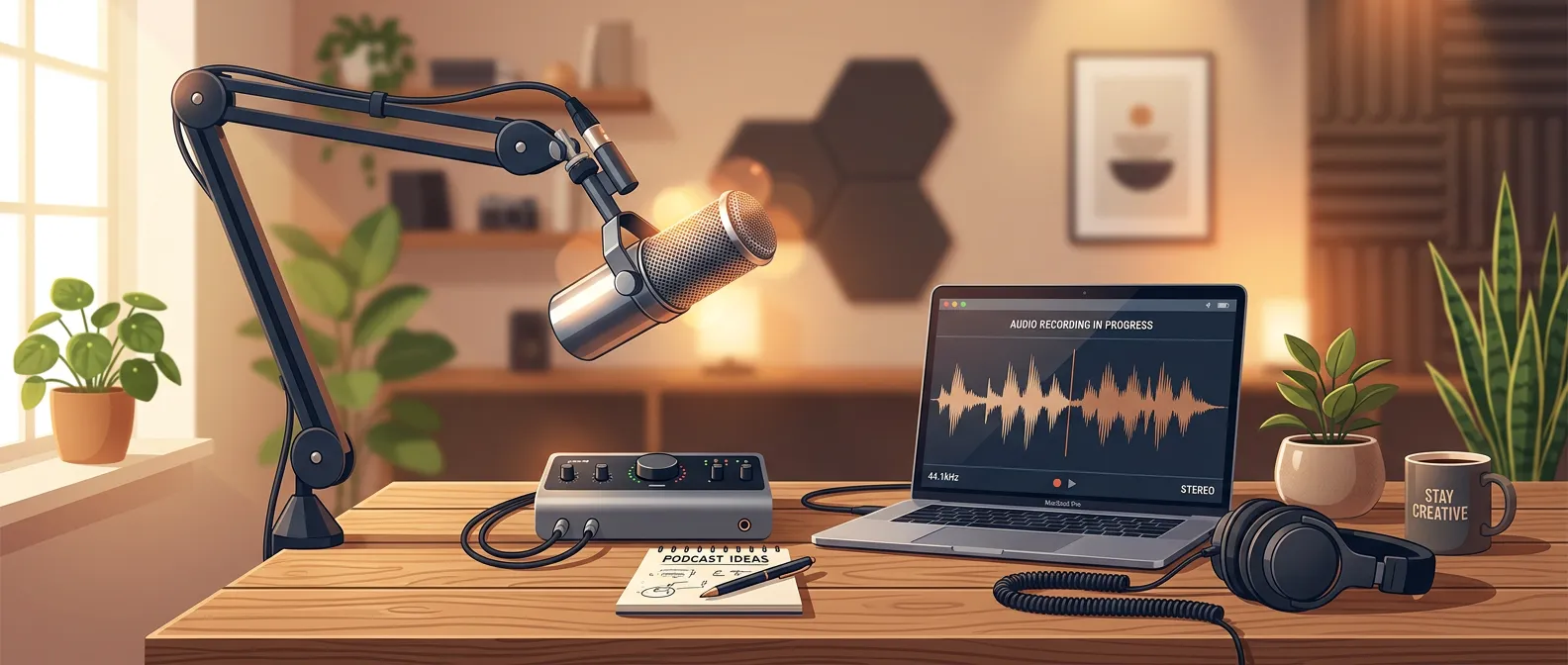
To learn how to start a podcast, you must define a specific niche, acquire a high-quality USB microphone, and record your inaugural episode using software like Audacity or Descript. Expect to invest roughly 10 to 15 hours in your initial setup, creative planning, and distribution across major streaming platforms.
Key Takeaways
Define a specific niche and target listener persona to ensure product-market fit before recording your first episode.
Expect to invest 10 to 15 hours in initial setup, content planning, and distribution workflows to launch your show.
Prioritize room acoustics and proper microphone placement over buying expensive audio hardware for high-quality, professional sound.
Use a dedicated hosting platform to generate your RSS feed, which is the only way to automate distribution to Spotify and Apple Podcasts.
Structure episodes to deliver your core value proposition within the first 60 seconds to maximize listener retention and growth.
Defining Your Podcast Value Proposition and Target Listener
To successfully launch a show, you must define a specific niche and a singular listener persona that addresses a documented audience pain point rather than general interests. This product-market fit ensures your content provides immediate value, preventing the common trap of creating generic shows that compete with industry giants.
Identifying your niche and specific listener persona
Start by identifying a ‘content void’ where current creators lack depth or a specific perspective your target audience needs. A well-defined listener persona should be descriptive enough that you can predict their frustrations; for example, identify if your listener is a professional seeking time-saving hacks or a hobbyist searching for community connection.
Use the Podchaser database to analyze metadata and listener reviews in your category to identify recurring complaints you can solve. Aim for a target audience that is 500 to 2,000 active listeners who prefer deep-dive content over breadth. This narrow focus is the primary driver of organic discoverability in Apple Podcasts and Spotify algorithms.
Why audience retention matters more than equipment
Audience retention serves as the ultimate metric for measuring show health, often outweighing production quality in initial listener conversion. Data indicates that top-performing programs maintain a 70% listen-through rate for the first 10 minutes of an episode, regardless of microphone brand or studio acoustics.
Prioritize consistent formatting and topic delivery over expensive hardware, as listeners will tolerate minor audio imperfections if the information provides clear utility. A common failure mode for beginners is ‘feature creep,’ where creators spend too much time on high-end production but neglect the structural loop that keeps listeners returning every week.
How to Start a Podcast with Minimal Hardware
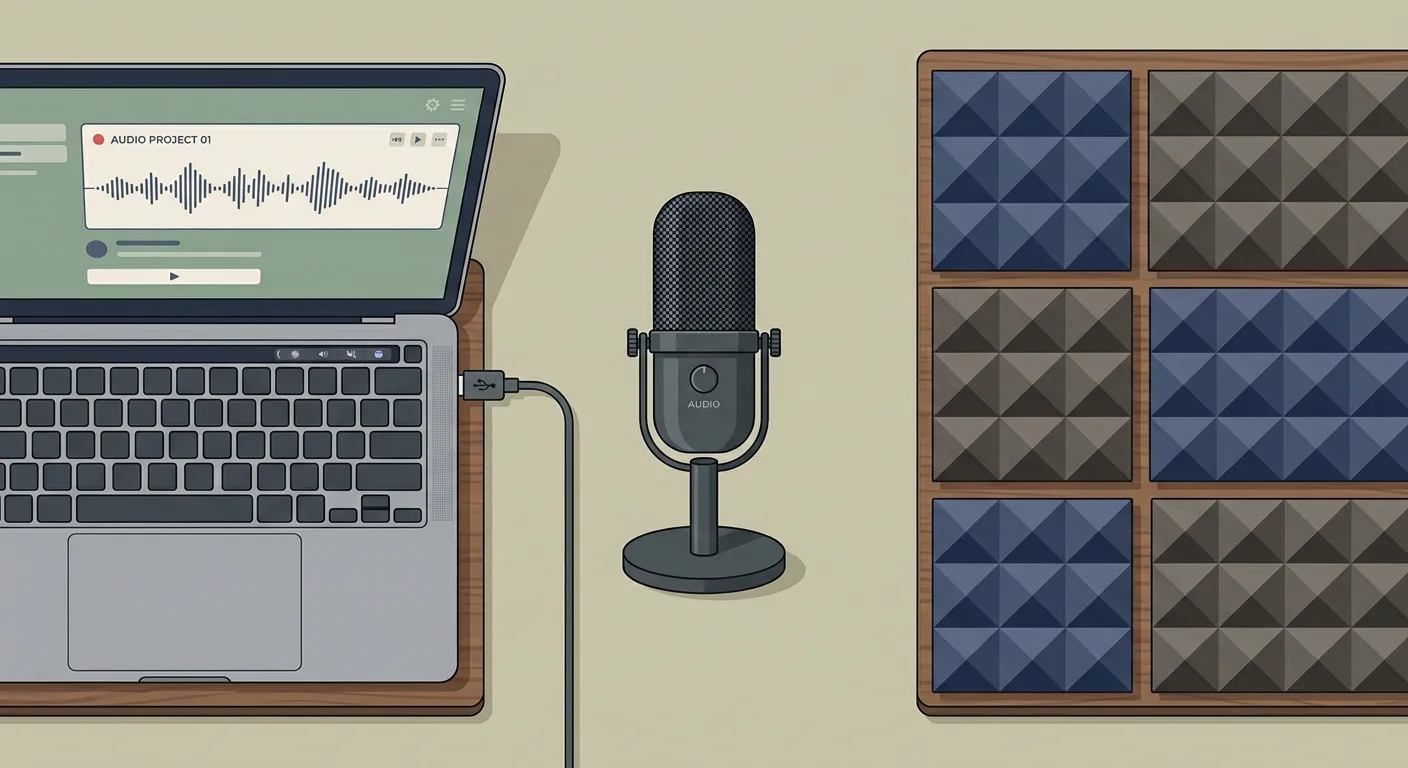
You can launch a professional-sounding show using only a basic USB dynamic microphone and your computer, provided you control your recording environment’s acoustics. High-end equipment provides diminishing returns; focus instead on microphone placement and room treatment to yield the highest audio quality.
Microphone polar patterns: Choosing the right mic for your environment
Microphone polar patterns dictate how audio is captured, and choosing the correct pattern is essential for minimizing background noise. A cardioid pattern is the industry standard for solo creators, as it records sound primarily from the front while rejecting ambient noise. If you record in suboptimal spaces, a dynamic microphone with a cardioid pattern will outperform a sensitive condenser model by ignoring erratic room reflections. For optimal clarity, maintain a distance of approximately four to six inches between your mouth and the microphone capsule.
Software alternatives for professional-sounding recording
Modern digital audio workstations have evolved toward AI-assisted workflows that save hours of production time. Descript is recommended for beginners because it allows you to edit audio by deleting text in a generated transcript. If you prefer a traditional interface, Audacity remains the standard for free, open-source audio processing, offering powerful noise gate and normalization features. Regardless of the software used, ensure your final file is exported as a 96kbps to 128kbps MP3 to balance small file sizes with high-fidelity streaming quality. Avoid over-processing; a raw but clear file is superior to an over-compressed recording that sounds robotic.
Podcast Hosting and Technical Distribution Workflow
Podcast hosting platforms act as the central repository for your audio files and generate the RSS feed required to syndicate your show to directories like Apple Podcasts and Spotify. Once you upload an episode to your host, the platform distributes that file simultaneously across all major listening apps, ensuring listeners receive new content without manual intervention.
How to Select a Podcast Host
Choose a host based on reliable analytics and infrastructure, as most platforms now include unlimited bandwidth as a standard offering for entry-level plans. A robust host provides the unique URL of your RSS feed, which serves as the definitive bridge between your creative work and the global podcasting ecosystem.
Submitting Your RSS Feed
You must submit your feed link directly to Apple Podcasts Connect and Spotify for Podcasters one time during your initial setup. After this one-time submission, these directories pull new episodes automatically whenever your hosting platform updates the feed, usually within 60 minutes of publication.
The Role of ID3 Tags and Cover Art
Technical metadata, specifically ID3 Tags, helps apps display the correct episode title, artist name, and sequence number within the listener’s queue. Ensure your episode metadata is embedded before upload.
Use 3000 x 3000 pixels for cover art.
Ensure files are in JPEG or PNG format.
Prioritize a high-contrast design that remains legible at thumbnail size.
Practitioner Insight: Avoid changing your hosting provider until you have a firm grasp of your RSS feed’s 301 redirect settings, as improper transfers can cause you to lose your existing subscriber counts and review history.
Comparison: Basic vs. Pro Podcast Production Tools
Tool Comparison for Podcast Production
Selecting the right production stack for your podcast depends on your tolerance for manual editing versus your budget for AI automation. Most professional-grade setups allow for 90% automation of repetitive tasks like noise reduction and show note generation, saving creators an average of 4 hours per episode.
Tool | Ease of Use | AI Features | Est. Monthly Cost |
|---|---|---|---|
Audacity | Moderate | Basic Plug-ins | $0 |
Descript | High | Full Transcription/Edit | $12-$24 |
Adobe Audition | Low | Workflow Automation | $23+ |
What is the easiest way to edit for beginners?
For most creators, Descript offers the lowest barrier to entry because it allows you to edit audio by editing its text transcript. When you delete a word in the document, the software automatically removes that segment from the audio file.
Practitioner insight: Avoid the “over-editing trap” by keeping authentic verbal cues like natural pauses and laughter unless they exceed three seconds. Rigidly removing every “um” or breath creates an unnatural delivery that diminishes audience trust. If you use AI to transcribe your show, use that text within a tool like Claude or ChatGPT to generate your show notes and social media clips. Prioritize tools that feature “cloud-sync,” as this ensures your project state is always saved and accessible.
Strategic Execution: Batching, AI Scaling, and Launch Plans
Structuring your episodes for maximum listener retention
To maximize retention when you start a podcast, adopt a modular episode structure that delivers your core value promise within the first 60 seconds. Front-loading the hook prevents listener drop-off and sets clear expectations for the remainder of the episode.
80% of active listeners decide whether to stay or skip based on audio quality and the clarity of your opening statement. Use a consistent template: an immediate benefit statement, a high-value teaser for the mid-roll content, and a clear call to action.
Using AI-assisted workflows for editing and show notes
AI tools reduce production fatigue by automating repetitive technical tasks. High-leverage creators use Descript for text-based editing alongside generative language models for creating SEO-optimized show notes.
Transcription: Use cloud-based engines to generate raw text.
Editing: Remove filler words and dead air automatically using smart gap-detection.
Repurposing: Prompt an AI with the transcript to create social media posts and newsletter snippets.
Launch tactics designed to trigger algorithm visibility
You can trigger algorithm visibility by launching with three episodes simultaneously, which provides sufficient data for platforms to categorize your show. A cluster launch creates a binge-capable experience that signals engagement to Spotify for Podcasters and Apple Podcasts.
Practitioner insight: Avoid launching with just a trailer. A trailer generates minimal retention data, whereas a three-episode launch provides the platform with statistically significant signals regarding your host-listener connection.
Essential Legal Considerations and Best Practices
To legally start a podcast, you must secure licensing for all copyrighted music and label any sponsored content to comply with advertising standards. Failing to protect your intellectual property or mismanaging disclosure requirements can lead to de-platforming or litigation.
Music licensing and copyright basics
Avoid using commercial songs or copyrighted sound effects without explicit permission or a paid license. A standard music license typically costs between $15 and $50 per track, though many creators prefer royalty-free platforms like Epidemic Sound or Artlist to simplify compliance.
Always check the Terms of Service for your hosting platform concerning user-generated content.
Assume all music is copyrighted unless marked as Creative Commons Zero (CC0).
Keep a digital folder of your licensing certificates for every piece of music used.
Dynamic ad insertion requirements and future-proofing
Plan for legal compliance during the monetization phase by implementing clear sponsorship disclosures. If you use Dynamic Ad Insertion (DAI), ensure your host provides tools to tag ad breaks accurately as required by the Federal Trade Commission (FTC) guidelines.
Practitioner insight: Many creators fail to realize that DAI archives your ads into your back catalog; update your legal agreements to include a termination clause that allows you to remove previous ads from older episodes if a brand relationship sours. Ensuring your RSS feed metadata includes explicit parental advisory labels when necessary also protects your show from being flagged during compliance audits.
Frequently Asked Questions
How much does it really cost to start a podcast?
You can start a podcast for as little as $100 to $200 by purchasing a high-quality USB dynamic microphone and utilizing free hosting trials and open-source editing software like Audacity. While professional setups can cost significantly more, beginners typically only need a reliable mic and a quiet recording space to achieve broadcast-quality audio.
Do I need fancy equipment to start a podcast?
You do not need fancy equipment to launch a professional-sounding podcast, as consistent microphone technique and room acoustics matter more than expensive hardware. A basic, high-quality USB dynamic microphone paired with a quiet, carpeted room or closet provides results that are virtually indistinguishable from high-end interfaces for most new podcast listeners.
Where is the best place to upload and host my podcast?
The best place to upload your podcast is a dedicated third-party hosting platform, which generates the RSS feed necessary to syndicate your audio across major apps. Platforms like Libsyn, Buzzsprout, or Anchor store your media files and track vital analytics, ensuring your episodes propagate correctly to Apple Podcasts, Spotify, and other major directories.
How do I get my show on Spotify and Apple Podcasts?
You get your show on Spotify and Apple Podcasts by creating an account on a podcast hosting platform and submitting your unique RSS feed link to their respective creator portals. Once your RSS feed is verified by these platforms, any new episode you upload to your host automatically updates and appears on those streaming services.