Essential Winter Golf Gear for Freezing Weather in 2026
Last updated: June 10, 2026 | 12 min read
TL;DR
- A strict three-layer apparel system (base, mid, outer) is the most effective way to retain body heat without restricting your golf swing.
- Golfers lose roughly two yards of carry distance for every 10-degree drop in temperature, making low-compression golf balls mandatory in freezing conditions.
- Cart mitts and rechargeable electronic hand warmers are necessary to maintain finger dexterity for proper grip pressure.
- Synthetic or merino wool base layers must replace cotton to prevent sweat from freezing against the skin.
- Switching to spiked winter golf boots prevents slipping on frost-covered tee boxes and frozen fairways.
What Is Essential Winter Golf Gear for Freezing Weather?
Essential winter golf gear for freezing weather is a specific category of apparel and equipment designed to block wind, retain body heat, and maintain your physical mobility on the course. This gear relies on modern thin-profile insulation, moisture-wicking fabrics, and cold-condition golf balls rather than heavy, restrictive coats.
Golfing in temperatures below 32°F (0°C) requires specialized preparation. Standard summer polos and standard-compression golf balls fail in these conditions. When the air is freezing, players need clothing that traps heat close to the body while allowing the upper torso to rotate through the swing.
The foundation of this setup is a moisture-wicking base layer, followed by a thermal mid-layer, and capped with a windproof shell. Beyond apparel, this category includes specialized cold-weather gloves, thermal headwear, and low-compression golf balls that react properly upon impact in near-freezing physical states.
How Freezing Temperatures Alter Your Golf Game
Freezing weather negatively affects your golf game by increasing air density, stiffening equipment materials, and limiting the rotational flexibility of your muscles. Colder air creates more drag on the golf ball in flight, while the ball's rubber core becomes harder and less responsive to clubhead strikes.
A golf ball loses approximately two yards of carry distance for every 10-degree (Fahrenheit) drop below 70°F (TrackMan, 2025). If you play in 30°F weather, your standard 150-yard iron shot will fly about eight yards shorter exclusively due to atmospheric physics.
Your body undergoes similar physical limitations. Cold temperatures cause blood vessels in the extremities to constrict, prioritizing heat for the core organs. This physiological response leads to stiff hands, poor grip control, and a restricted shoulder turn. Proper winter gear directly combats these physical and athletic declines by artificially warming the body and replacing standard equipment with cold-weather alternatives.
The Core Layering System for Winter Golf

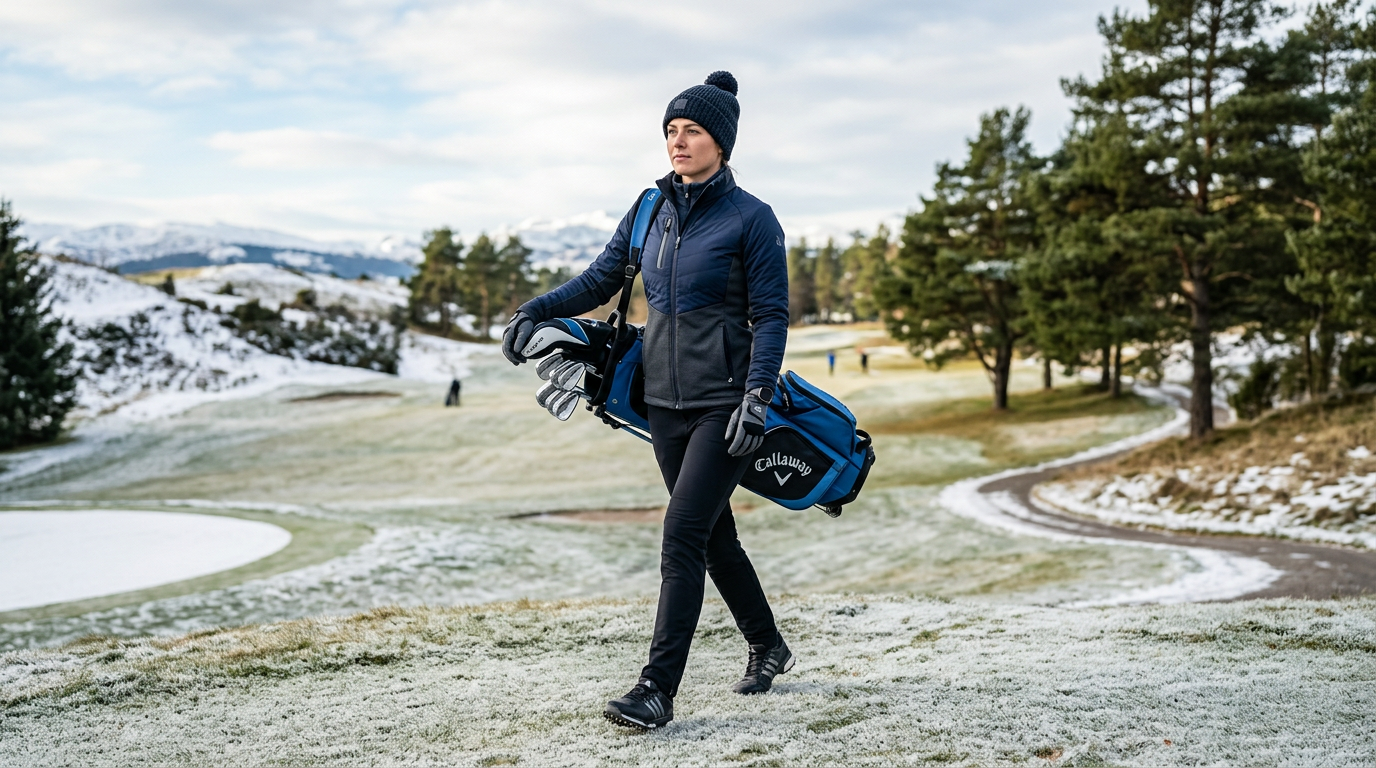
The core layering system for winter golf involves wearing three distinct, thin clothing layers: a moisture-wicking base, an insulating mid-layer, and a protective outer shell. This specific combination traps trapped body heat while allowing the arms and shoulders to swing freely.
Building a proper layering strategy prevents the need for heavy parkas or ski jackets on the golf course. Each layer performs a specific job in regulating body temperature.
Base Layers (Moisture Management)
The base layer sits directly against the skin and removes sweat before it can chill the body.
- You must choose merino wool or synthetic performance polyester for this layer.
- Merino wool naturally regulates temperature and resists odors, making it the most popular choice for winter golfers (Golf Datatech, 2026).
- The fit should be skin-tight to maximize its wicking capabilities and easily fit underneath additional clothing.
Mid Layers (Thermal Insulation)
The mid-layer provides the primary source of insulation by trapping warm air generated by your body base.
- Quarter-zip fleece pullovers or lightweight down-filled vests work best for this stage.
- Vests are highly recommended because they keep the chest and vital organs warm while leaving the arms completely unrestricted for the swing.
- Avoid bulky cotton sweatshirts, as they add unnecessary weight and restrict turning capability.
Outer Layers (Wind and Water Protection)
The outer layer acts as a shield against freezing wind, frost, and winter precipitation.
- A thin, windproof shell is the most effective outer garment for dry, freezing days.
- If playing in snow flurries or wet conditions, select a fully waterproof rain jacket made from Gore-Tex or similar breathable membranes.
- The outer shell should fit loosely enough to accommodate the base and mid-layers without bunching up in the shoulders at the top of your backswing.
Must-Have Essential Winter Golf Gear Accessories
The most effective winter golf accessories for freezing weather target the extremities, specifically the hands, head, and neck. Keeping your hands warm is the highest priority, as cold fingers destroy your ability to feel the clubface and maintain proper grip pressure.
Winter Golf Gloves and Cart Mitts
Standard leather golf gloves become stiff and useless in freezing weather.
- Buy a pair of specialized winter golf gloves made with thermal fleece linings and synthetic suede palms for grip in wet, frosty conditions.
- Wear oversized cart mitts between shots. These large mittens fit directly over your standard gloves while you walk to your ball or ride in the cart.
- Keep your hands inside the cart mitts until the exact moment you are ready to address the golf ball.
Thermal Beanies and Neck Warmers
A significant amount of body heat escapes through an unprotected head and neck.
- Swap the traditional baseball-style golf cap for a fleece-lined knit beanie that covers the tops of your ears.
- Add a thermal neck snood or gaiter. This simple tube of fleece blocks cold wind from blowing down the collar of your jacket.
- Neck warmers are easily pulled up over the chin and nose during high winds and pulled down when the sun comes out.
Electronic Hand Warmers
Chemical heat packets are helpful, but modern rechargeable warmers provide superior, consistent heat output.
- Pocket-sized electronic hand warmers generate temperatures up to 130°F (54°C) and last for 18 holes on a single charge.
- Store one in your dominant pocket to keep your bare hand warm between shots.
- Many cart enclosures now use portable propane heaters in the cup holders. These heaters raise the temperature inside a covered golf cart by up to 20 degrees (National Golf Foundation, 2025).
Selecting the Right Golf Equipment for Frozen Turf
Playing winter golf requires changing your equipment, specifically switching to low-compression golf balls and adjusting your footwear for frozen, slippery turf. Hard ground and cold temperatures change how equipment interacts with the earth and the clubface.
Low-Compression Golf Balls
High-compression tour balls become excessively hard in freezing weather, causing severe distance loss and a jarring sensation upon impact.
- Switch to a golf ball with a compression rating under 60.
- Soft-core balls compress easier upon impact, allowing players with slower winter swing speeds to maximize energy transfer.
- Store your golf balls indoors overnight before your round. A golf ball kept at 70°F indoors will retain its core warmth for the first few holes of the day.
High-Visibility Colored Golf Balls
Frost, dormant brown grass, and residual snow make finding traditional white golf balls incredibly difficult in January and February.
- Yellow, orange, or matte red golf balls stand out against winter course conditions.
- Matte finishes reduce the glare from the low-hanging winter sun, making it easier to track the ball in flight.
Winter Golf Footwear
Frozen ground removes the natural give of standard summer turf.
- Wear golf shoes modeled after hiking boots. These provide elevated ankle support and waterproof protection against morning frost.
- Choose spiked shoes over spikeless models. Plastic cleats penetrate frozen soil and frost better than flat rubber nubs, preventing your feet from slipping during aggressive swings.
Common Mistakes to Avoid with Winter Golf Apparel
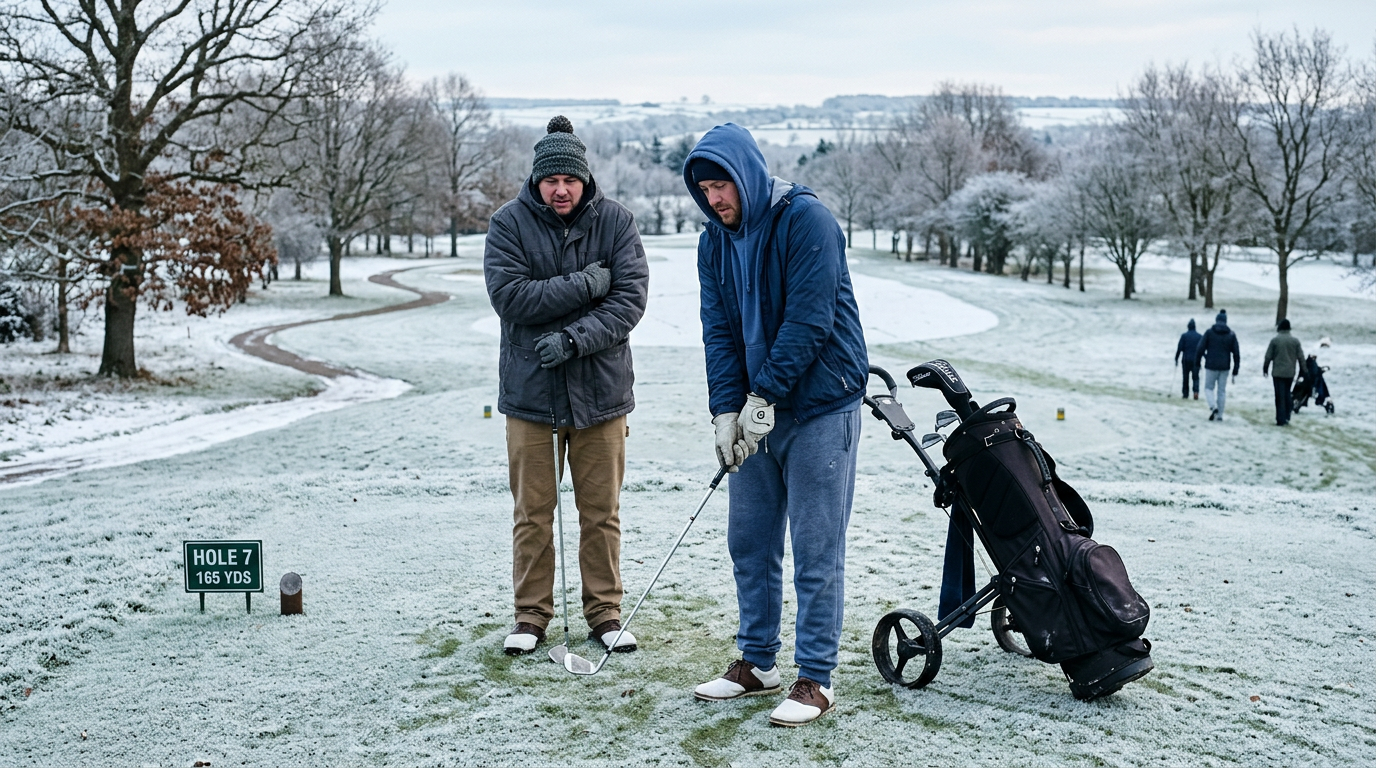
Many players fail at winter golf simply because they dress for a static outdoor activity rather than an athletic movement. Avoiding basic apparel mistakes keeps you on the course longer.
- Wearing cotton base layers: Cotton absorbs sweat and holds it against the skin. When the cold air hits that wet fabric, your core temperature drops rapidly. Always use synthetic polyesters or merino wool.
- Using heavy winter coats: Ski jackets are excellent for standing still but terrible for swinging a golf club. Thick sleeves prevent the arms from forming a proper triangle at address and block shoulder rotation. Use a vest and a thin wind shell instead.
- Leaving equipment in the car trunk: Golf clubs and balls left in a freezing trunk overnight become rigid. The epoxy holding the clubheads to the shafts becomes brittle in freezing temperatures, and cold golf balls lose maximum velocity (Equipment Standards Review, 2026). Store your golf bag inside your home during the winter months.
Frequently Asked Questions About Winter Golf Gear
What is the best way to keep hands warm during winter golf?
The best way to keep hands warm is to wear oversized, fleece-lined cart mitts between every shot. Place a rechargeable electronic hand warmer inside each mitt to create an oven-like environment for your fingers. Remove the mitts only when it is time to grip the club and swing.
How does freezing weather affect golf ball distance?
Freezing weather reduces golf ball distance by hardening the rubber core of the ball and increasing the density of the air it flies through. Players typically lose about two yards of carry distance for every 10-degree drop below 70°F. Switching to a soft, low-compression ball helps mitigate this distance loss.
What is a low-compression golf ball?
A low-compression golf ball is a ball engineered with a softer rubber core that requires less clubhead speed to squash upon impact. In freezing weather, standard balls become hard and resist compression. A low-compression ball flexes properly even when the ambient temperature drops below 32°F.
Can I wear regular winter coats for golf?
You should not wear regular winter coats for golf because the bulk restricts your arms and shoulders. A golf swing requires a wide turning radius and connected arms. Standard winter coats force the arms apart and limit hip rotation; you should use a thin wind-shell over an insulating vest instead.
Why does layering matter for winter golf?
Layering allows active golfers to adapt to changing body temperatures and restrict cold air from reaching the skin. A base, mid, and outer layer work together to trap heat while remaining thin enough to allow an uninhibited golf swing. Layers can also be removed if the sun comes out and temperatures rise on the back nine.
Key Takeaways
- Always build your winter golf outfit using three distinct layers: a moisture-wicking base, an insulating mid-layer, and a protective, windproof shell.
- Protect your hands at all costs by utilizing cart mitts and electronic hand warmers between golf shots.
- Replace high-compression tour balls with low-compression, brightly colored golf balls to maintain distance and visibility on frozen turf.
- Never wear cotton base layers on the golf course during the winter, as they trap freezing sweat against your skin.
- Store your golf bag and extra golf balls inside your heated home, not in a cold car trunk, to protect the epoxy and core materials.