19 Remote Team Productivity Tips for Elite 2026 Performance

The most effective remote team productivity tips involve establishing clear communication protocols, using the right technology stack, and building a culture of trust and asynchronous work. This approach shifts the focus from perceived activity, like being online, to actual output and tangible results. It empowers your team with the autonomy they need to do their best work, regardless of location.
By mastering these areas, leaders can eliminate the friction points common in distributed environments, such as communication delays and social isolation. The goal isn't to replicate an office online but to build a new, more efficient system. This guide provides actionable strategies, refined for the realities of work in 2026, to help your remote team not just function but truly excel.
Why Is Measuring Remote Productivity So Different?
Measuring remote productivity requires a fundamental shift from observing inputs to evaluating outputs. In a traditional office, managers often rely on "presenteeism"—seeing employees at their desks—as a proxy for work. This is impossible and irrelevant in a remote setting. Instead, the focus must be on tangible results, completed projects, and achieved goals.
This output-based approach is more objective and fair. It forces teams to define what success looks like for each role and project, leading to greater clarity and alignment. In 2026, elite remote teams thrive on asynchronous-first workflows and deep work, concepts that are difficult to measure with old-world metrics. True productivity isn't about how many hours someone is logged into Slack; it's about the value they create during their focused time.
Key Takeaways
- Prioritize Asynchronous Communication: Default to communication that doesn't require an immediate response (e.g., detailed project updates via Asana instead of instant messages) to protect deep work time.
- Focus on Outcomes, Not Hours: Measure success based on completed tasks, quality of work, and project milestones—not on who has the greenest "active" status dot.
- Invest in the Right Tech Stack: Use integrated tools for project management, communication, and documentation to create a single source of truth and reduce friction.
- Document Everything: Create a comprehensive team handbook and document all processes and decisions. This is your team's collective brain and a crucial tool for asynchronous work.
- Combat Burnout Proactively: Set clear expectations for work hours, encourage breaks, and provide mental health resources. Remote burnout is a silent killer of productivity.
- Build Deliberate Culture: Remote culture doesn't happen by accident. Schedule virtual social events, use specific channels for non-work chat, and foster psychological safety.
Foundational Strategies: Setting Your Remote Team Up for Success
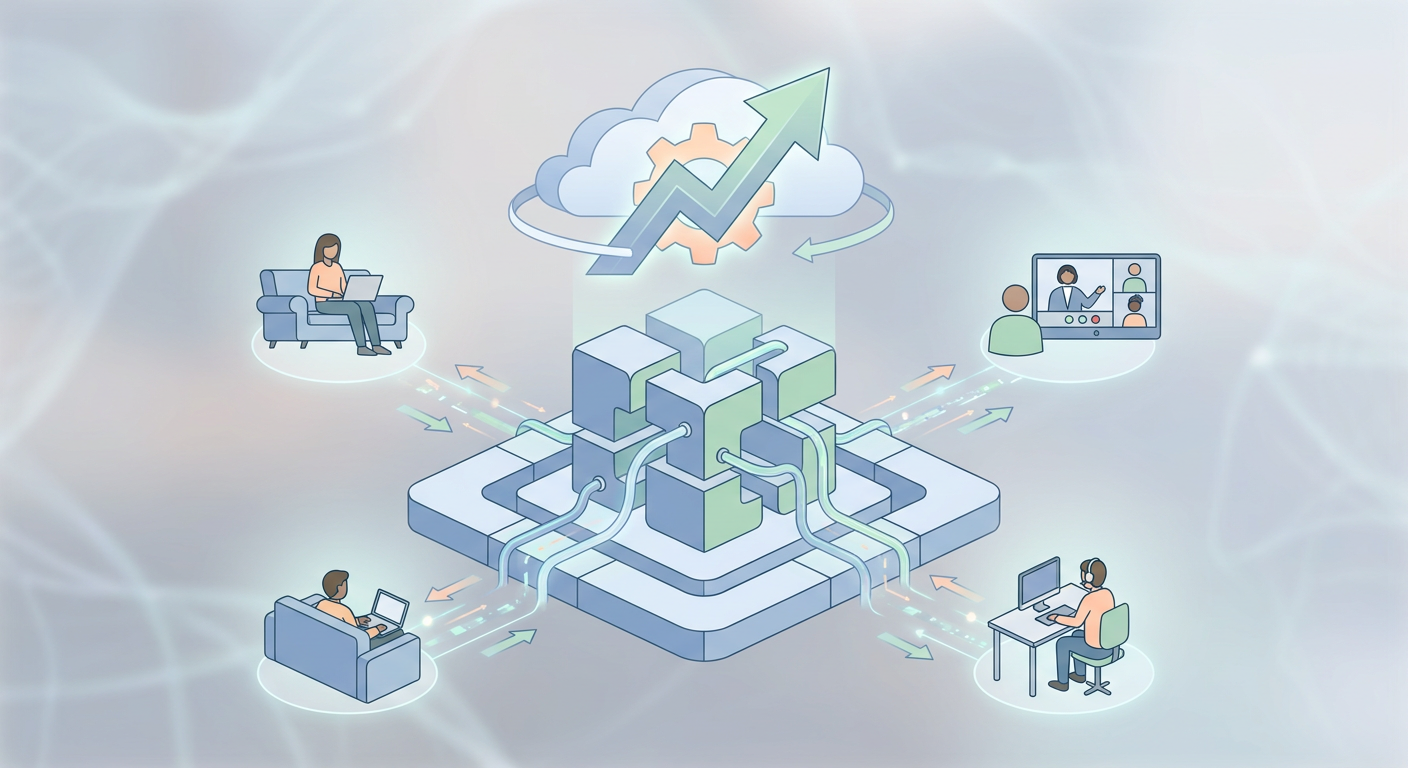
Before you can implement specific tips, you need a solid foundation. These strategies are the bedrock of any high-performing remote team.
1. Define and Document Your Communication Cadence
Don't leave communication to chance. Create a Communication Charter that explicitly states which tool to use for what purpose. This eliminates confusion and streamlines information flow.
- Slack/Teams: For quick, informal queries and social chat. Create channels like
#urgent-p0for true emergencies. - Email: For formal, external communication with clients or partners.
- Project Management Tool (Asana, Monday, Jira): For all task-related updates, questions, and feedback. This keeps conversations in context.
- Video Calls (Zoom, Google Meet): For complex brainstorming, sensitive 1:1s, and team-building.
2. Establish a Single Source of Truth
A remote team's biggest enemy is scattered information. A single source of truth (SSOT) is a centralized repository where all critical company information, processes, and project documentation lives. This is non-negotiable for asynchronous work.
Use a tool like Notion, Confluence, or Slite to build your company wiki. This should include:
- Company policies and values
- Team directories and roles
- Step-by-step process guides (SOPs)
- Meeting notes and decision logs
3. Hire for Remote-First Traits
Not everyone is suited for remote work. When hiring in 2026, screen for traits that predict success in a distributed environment:
- Strong written communication skills: Essential for clarity in an async world.
- Self-discipline and autonomy: You need people who can manage their own time effectively.
- Proactive problem-solving: Individuals who seek solutions independently before escalating.
- High levels of trust and integrity: The foundation of remote work is trusting your team to do their job without supervision.
4. Overhaul Your Onboarding Process
Remote onboarding needs to be more structured and deliberate than in-person onboarding. A great experience sets the tone and accelerates a new hire's time to productivity.
Your remote onboarding should include:
- A 30/60/90-day plan with clear goals.
- A dedicated onboarding buddy to answer informal questions.
- Scheduled introductory 1:1s with every team member.
- A "starter project" that allows them to learn key processes and tools hands-on.
How to Master Asynchronous Communication in 2026
Asynchronous ("async") communication is the superpower of elite remote teams. It's the practice of communicating without the expectation of an immediate response. This respects everyone's time zones and allows for uninterrupted deep work.
5. Write Better Project Briefs and Updates
Clarity is kindness. A vague request that would take 2 minutes to clarify in an office can cause hours of delay remotely. Write every communication as if the recipient won't see it for 8 hours.
- Provide full context: Link to relevant documents and previous discussions.
- State the desired outcome: What does "done" look like?
- Specify the deadline: Use actual dates and time zones (e.g., "by 5 PM PST on Friday, October 25th").
- Anticipate questions: Think ahead and provide the answers proactively.
6. Use Loom for "Show, Don't Just Tell"
Sometimes text isn't enough. Instead of scheduling a meeting to explain a complex topic or give feedback on a design, record a short video of your screen using a tool like Loom or Vidyard. You can talk through your feedback while pointing to specific elements, providing rich context in a fraction of the time.
7. Kill the Daily Stand-up Meeting
The synchronous daily stand-up is a relic of the office. It interrupts deep work and is often inefficient across multiple time zones. Replace it with an asynchronous check-in using a tool like Geekbot for Slack or a dedicated project management thread. Team members can post their updates when it suits them, and everyone can review them at their convenience.
8. Set Clear Expectations on Response Times
Async doesn't mean "never." Establish clear Service Level Agreements (SLAs) for communication. For example:
- Slack/Teams: Acknowledge within 3-4 hours during your working block.
- Project Management Comments: Respond within 24 hours.
- Email: Respond within 48 hours.
This reduces anxiety and prevents team members from feeling like they need to be constantly online.
The Best Tech Stack for Remote Team Productivity

Your tools should reduce friction, not add to it. A well-integrated tech stack acts as the central nervous system for your remote team.
9. A Robust Project Management Hub
This is your virtual office. All work should flow through it. Leading platforms in 2026 like Asana, Monday.com, Trello, and ClickUp provide visibility into who is doing what by when. The key is 100% adoption—if work happens outside the tool, chaos ensues.
10. Communication Tools: Sync vs. Async
Choose tools that align with your communication philosophy.
| Tool Category | Purpose (When to Use) | 2026 Examples |
|---|---|---|
| Asynchronous Chat | Default for daily updates, non-urgent questions | Slack, Twist, Microsoft Teams |
| Project Management | Task assignments, status updates, feedback | Asana, Jira, Monday.com |
| Documentation | Company handbook, process guides, meeting notes | Notion, Confluence, Slite |
| Video Messaging | Complex explanations, design feedback, code reviews | Loom, Vidyard, CloudApp |
| Synchronous Video | 1:1s, urgent problem-solving, team building | Zoom, Google Meet, Around |
11. Invest in a Collaborative Whiteboard
For the moments when you do need to brainstorm visually and synchronously, a digital whiteboard is essential. Tools like Miro and Mural allow teams to collaborate on mind maps, flowcharts, and strategic plans in real time, no matter where they are.
Advanced Tips for Preventing Remote Burnout and Boosting Morale
Productivity plummets when your team is exhausted and disconnected. These strategies focus on the human element of remote work.
12. Mandate Real Vacation Time
Remote employees often find it hard to unplug. Managers must lead by example by taking their own vacation time and fully disconnecting. Implement policies that encourage time off, such as a minimum vacation requirement or wellness stipends.
13. Encourage "Working Blocks" and "Offline" Time
Normalize a calendar that isn't packed with back-to-back meetings. Encourage team members to block out 2-4 hour chunks of "Focus Time" on their shared calendars. Respect these blocks as you would a formal meeting. This signals that deep work is valued.
14. Run Regular "Pulse" Surveys
Don't guess how your team is feeling. Use simple, anonymous surveys to regularly check in on morale, workload, and engagement. Tools like Officevibe or even a simple Google Form can provide crucial insights into team health before small issues become big problems.
15. Create Deliberate Social Rituals
Connection doesn't happen organically around a water cooler anymore. You have to build it.
- Dedicated Social Channels: A
#pets-of-companyor#randomchannel in Slack. - Virtual "Donut" Coffees: Use apps that randomly pair team members for 15-minute non-work chats.
- Game Time: Schedule a monthly session to play online games like Jackbox or Codenames.
16. Support Ergonomic Home Offices
An uncomfortable workspace is a drain on productivity and well-being. Offer a WFH stipend that employees can use to purchase an ergonomic chair, a proper monitor, or a standing desk. It's a small investment with a huge return in employee health and happiness.
Common Remote Productivity Mistakes to Avoid
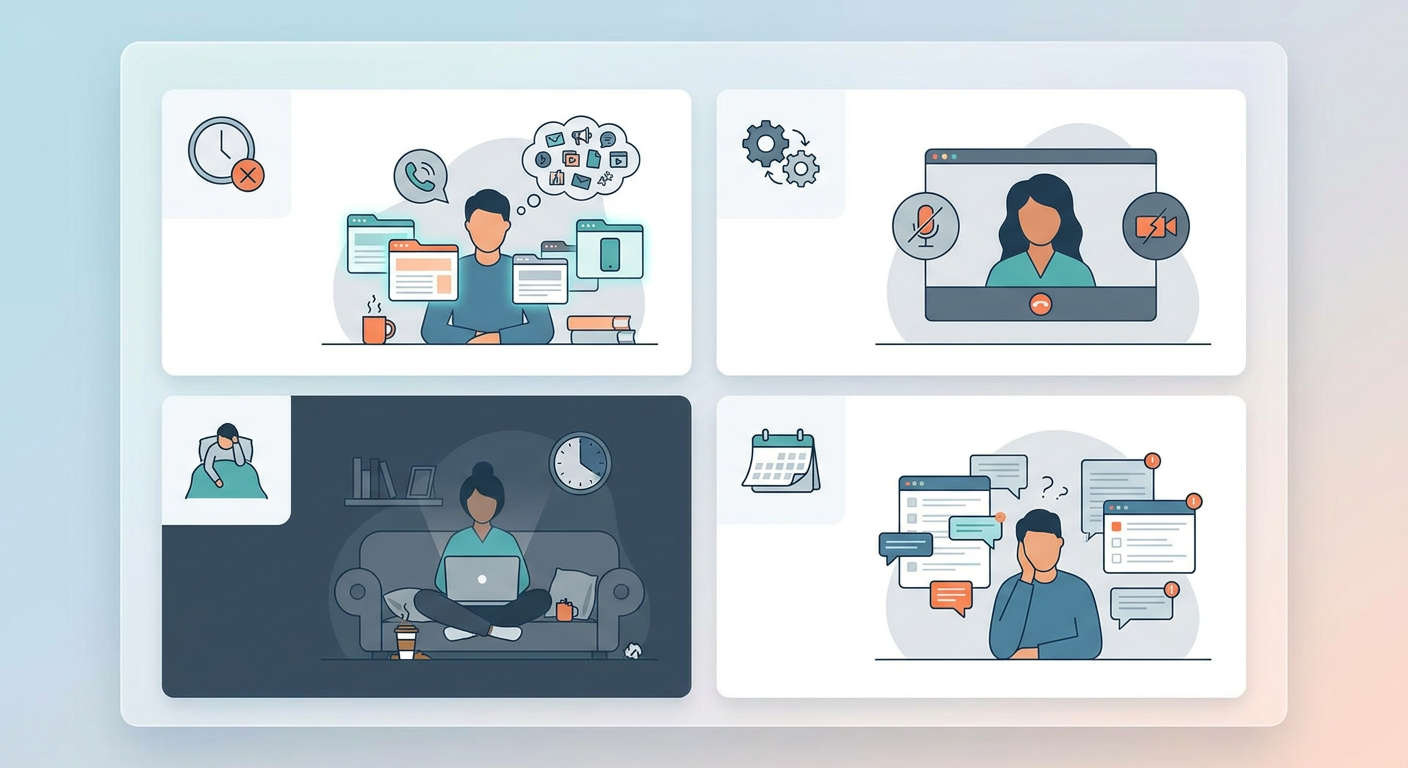
- Using Invasive Surveillance Software: "Tattleware" that tracks keystrokes or takes screenshots destroys trust instantly. It measures activity, not productivity, and fosters a culture of fear.
- Too Many Meetings: Using synchronous video calls as the default for all communication. This is a primary driver of "Zoom fatigue" and a massive productivity killer.
- Ambiguous Task Ownership: Not clearly assigning a single owner to each task in your project management system. This leads to tasks falling through the cracks.
- Ignoring Time Zone Differences: Scheduling meetings that require colleagues in other regions to attend late at night or early in the morning. Always rotate meeting times to be fair.
- Neglecting 1:1s: Canceling or deprioritizing regular one-on-one meetings. These are more critical than ever in a remote setting for building rapport, providing feedback, and spotting signs of burnout.
Frequently Asked Questions
How do you keep remote teams motivated?
Keep remote teams motivated by connecting their work to the company's mission, recognizing their achievements publicly, and providing clear paths for growth. Trust and autonomy are huge motivators; micromanagement is the fastest way to kill morale. Regular, constructive feedback in 1:1s is also essential.
What is the best way to run a remote team meeting?
The best remote meetings are short, have a clear agenda, and involve a small number of people. Circulate a mandatory pre-read document so everyone arrives with context. The meeting itself should be for discussion and decision-making, not for information sharing. Always end with clear action items and owners.
How do you track remote employee performance fairly?
Track performance by focusing on outcomes, not activity. Set clear, measurable goals (OKRs are great for this) for each role and project. Evaluate performance based on the quality and timeliness of work delivered, contributions to team goals, and alignment with company values—not on hours logged online.
How can I promote work-life balance on a remote team?
Promote work-life balance by setting explicit start and end times for the workday, discouraging communication after hours, and leading by example. Encourage employees to take all their vacation time and offer flexibility for personal appointments. Trust your team to manage their energy and time effectively.
What are the key remote team productivity metrics?
Key metrics include task completion rate, project milestone velocity, quality of output (e.g., bug rates for engineers, client satisfaction for service teams), and employee engagement scores. The focus should always be on metrics that reflect actual value created, not on vanity metrics like emails sent.
Beyond the Tips: Building a Culture of Productivity
Ultimately, remote team productivity isn't about a list of tips—it's about culture. A truly productive remote environment is built on a foundation of trust, clarity, and autonomy. The strategies outlined here are the tools to build that culture.
In 2026, the debate over whether remote work is "productive" is over. We know it can be, but it requires intentionality. By moving from a culture of presence to a culture of performance, you empower your team to do their best work. Stop trying to manage your team's time. Instead, provide them with clear goals, the right tools, and the trust to achieve them. That is the true secret to unlocking elite remote team performance.