How to Hit a Hybrid Off the Fairway: The 2026 Master Guide
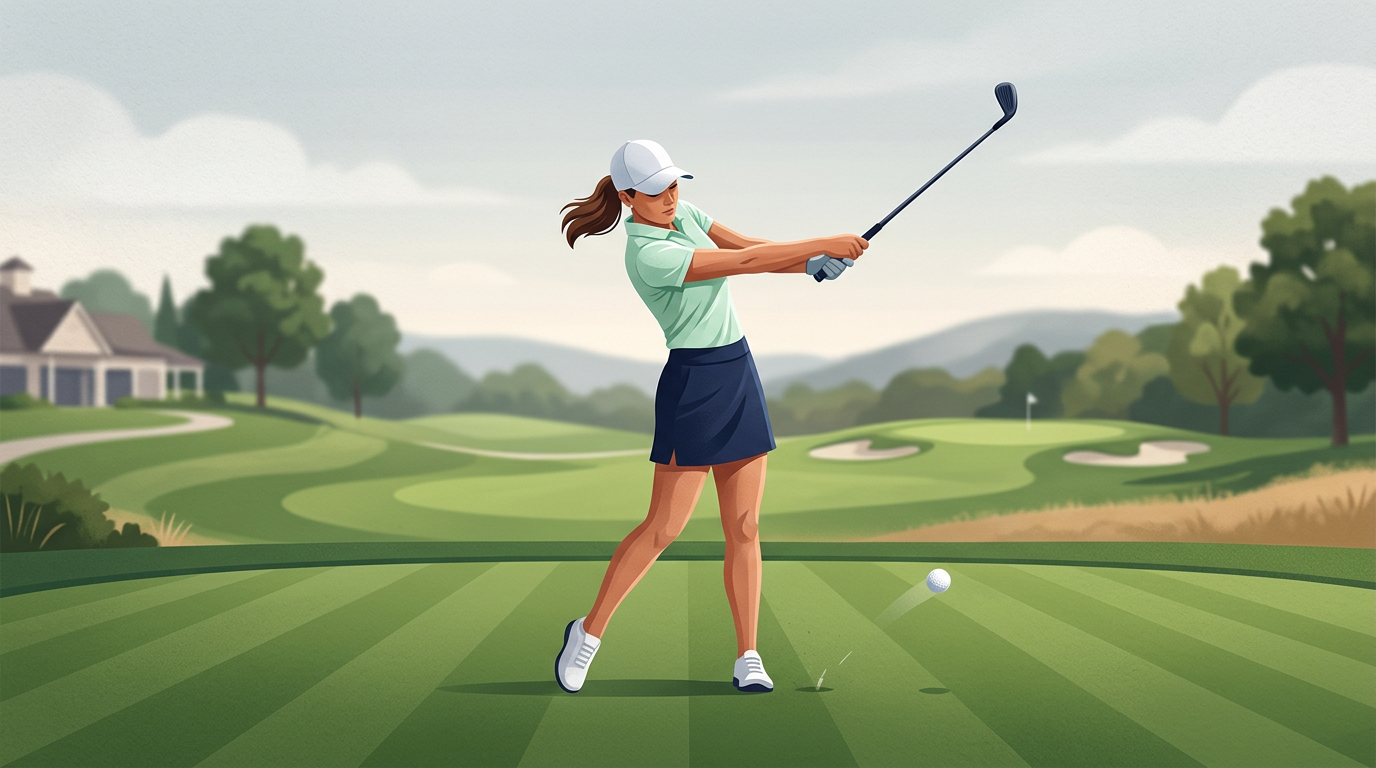
To hit a hybrid off the fairway, you must swing the club like an iron by striking the ball with a slight downward blow rather than sweeping it like a fairway wood. Position the ball slightly forward of center in your stance—roughly two inches inside your lead heel—and focus on taking a thin, bacon-strip divot just after impact.
This downward angle of attack engages the hybrid's low center of gravity, launching the ball high with enough spin to hold the green. Many golfers struggle because they attempt to "help" the ball into the air by leaning back, which leads to topped shots or thin contact.
Mastering this shot requires a shift in mindset: treat the hybrid as a "forgiving long iron" rather than a "small wood." By following the technical checkpoints below, you will gain the consistency needed to reach long par-4s in two or attack par-5s with confidence.
Key Takeaways: Hybrid Mastery in 2026
- Strike Down, Not Up: The most common mistake is trying to sweep the ball. Treat it like a 7-iron.
- Ball Position: Place the ball roughly two clubheads' width inside your lead heel.
- Trust the Loft: Modern 2026 hybrid designs are built to launch high; your body doesn't need to add lift.
- Controlled Tempo: A 75% smooth swing often produces more distance than a 100% "kill" shot.
- Shaft Lean: maintain a slight forward lean of the shaft at address to encourage a clean strike.
Why Golfers Struggle With Fairway Hybrids
The hybrid is a "transitional" club, which creates a mental conflict for the average player. Its head looks like a wood, suggesting a sweeping motion, but its shaft length and lie angle are closer to an iron.
In 2026, data from top launch monitors shows that the "sweep" approach is the leading cause of "thin" or "sculled" shots. When you sweep, the leading edge of the club hits the equator of the ball. To get the performance promised by manufacturers (high launch and soft landing), you must compress the ball against the turf.
Step-by-Step: How to Hit a Hybrid Off the Fairway
1. The Setup and Ball Position
Start with your feet shoulder-width apart. Because a hybrid is longer than a standard iron, you need a slightly wider base for stability, but don't go as wide as your driver stance.
Ball Position: For a 3-hybrid or 4-hybrid, the ball should be about two inches behind your lead heel. If the ball is too far forward (like a driver), you will hit it on the upswing, causing a hook or a top. If it’s too far back, you’ll dig too deep into the turf.
2. Posture and Alignment
Maintain a neutral spine with a slight bend at the hips. Your arms should hang naturally. Importantly, ensure your shoulders are square to the target line. Many golfers inadvertently open their shoulders when hitting hybrids, which leads to a "slice" across the ball.
3. The Takeaway and Backswing
Keep the takeaway low and wide to build centrifugal force, but avoid the "lift" at the top. You want a rounded, athletic turn. Think about keeping your trail knee braced to prevent swaying. A common 2026 swing thought used by pros is "completing the turn"—ensuring your back faces the target before you start the downswing.
4. The Transition and Strike
As you start down, shift your weight to your lead side. This is the "secret sauce" for the hybrid. By shifting your weight forward, you ensure the lowest point of your swing arc occurs after the ball.
The Visual: Imagine pushing a nail through the back of the ball into the ground. This promotes the downward strike that makes hybrids so effective from the short grass.
| Feature | Hybrid Approach | Fairway Wood Approach |
|---|---|---|
| Swing Type | Descending (like an iron) | Sweeping (shallow) |
| Ball Position | Slightly forward of center | Just inside lead heel |
| Divot | Small, "bacon-strip" divot | Scuffing the grass |
| Primary Goal | Accuracy & Green-holding | Maximum Distance |
Essential Tips for Different Fairway Lies
Not all fairways are created equal. The 2026 hybrid's versatile sole is designed to handle various conditions, but you must adjust your technique accordingly.
Hitting from a Tight Lie
On firm, tight fairways, golfers fear "thinning" the ball. To combat this, narrow your stance slightly and focus on hitting the "inside-back" quadrant of the ball. Keep your chest turning through the shot; if your chest stops moving, your hands will flip, leading to a blade.
Hitting from a Lush Fairway
If the grass is thick and soft, the clubhead may want to snag. Grip the club slightly tighter (about a 6 out of 10 pressure) to ensure the face stays square. Since the ball is "sitting up," you can afford a slightly shallower swing, but still aim for a clean, ball-first contact.
Handling Uphill and Downhill Lies
- Uphill: The slope will naturally increase the loft. Take one extra club (e.g., use a 3-hybrid instead of a 4) and tilt your shoulders to match the slope.
- Downhill: This is the hardest shot in golf. Put the ball further back in your stance and focus on "chasing" the clubhead down the slope after impact.
Choosing the Right Hybrid for Your Game in 2026
Modern technology has split hybrids into two distinct categories. Understanding which one you own will dictate how you swing it.
Wood-Style Hybrids (High MOI)
These have larger, more rounded heads. They are designed for maximum forgiveness and a higher launch. If you tend to struggle with height, these are your best friend. They respond well to a "neutral" strike—neither a heavy steep blow nor a flat sweep.
Iron-Style Hybrids (Utility Irons)
These look like "thick" irons. They are preferred by lower-handicap players who want to "flight" the ball lower or hit draws and fades. These require an aggressive downward strike. If you don't take a divot with these, they will not perform.
Common Mistakes to Avoid
- Over-swinging: Because hybrids look like "power" clubs, golfers often swing at 100%. This disrupts timing. Aim for 80% power.
- Playing it Like a Driver: Do not tee the ball up high in your mind. If you try to hit the ball on the upswing, the hybrid's design works against you, causing high-spin, weak shots.
- Static Weight: If you stay on your back foot, you will "fat" the shot (hit the ground before the ball). Always move your weight toward the target.
Advanced Techniques: Shaping Your Hybrid Shots
Once you can hit it straight, you can use the hybrid’s unique weighting to your advantage.
- The Power Fade: Aim slightly left of your target (for a right-hander) and hold the face open slightly through impact. This is the perfect shot for holding a green on a long approach.
- The Low Runner: If you’re playing into the wind, move the ball one inch further back in your stance and shorten your follow-through. This keeps the trajectory piercing and low.
Frequently Asked Questions
Should I take a divot with a hybrid?
Yes, you should ideally take a shallow divot on the target side of the ball. While you don't need a deep, "chunky" divot like you might with a wedge, a "bacon-strip" divot indicates that you hit the ball first and the ground second, which is essential for proper compression.
Where should the ball be in my stance for a hybrid?
The ball should be positioned about two inches inside your lead (front) heel. This is slightly further forward than a middle iron (like a 7-iron) but further back than a 3-wood or driver. This position allows the club to bottom out exactly at the point of impact.
Is a hybrid easier to hit than a fairway wood?
For most players, yes. Hybrids have shorter shafts, which provides more control, and a more compact head that glides through the turf efficiently. In 2026, many golfers have replaced their 3-woods and 5-woods with high-lofted hybrids for better consistency on long approach shots.
Why do I keep hooking my hybrid?
The "miss" for many hybrid players is a sharp hook. This usually happens because hybrids are designed with a draw bias (the weight is in the heel) and narrower soles. To fix this, ensure your grip isn't too "strong" (turned too far to the right) and focus on rotating your body fully through the shot.
How do I stop topping the ball with my hybrid?
Toppers are caused by trying to "lift" the ball into the air. This causes your spine angle to tilt backward at impact. To stop topping, keep your sternum over the ball at impact and trust the club's built-in loft to do the work.
Final Thoughts on Fairway Hybrid Success
The hybrid is the most versatile tool in a 2026 golfer's bag, but it only works when you respect its design. By positioning the ball slightly forward and committing to a downward, iron-like strike, you transform the club from a source of anxiety into a "cheat code" for long-range accuracy. Practice your tempo on the range, focus on hitting the ball before the turf, and you will see your scores drop as your "unreachable" greens suddenly become attainable.