Top Indoor Plants for Low Light That Actually Thrive
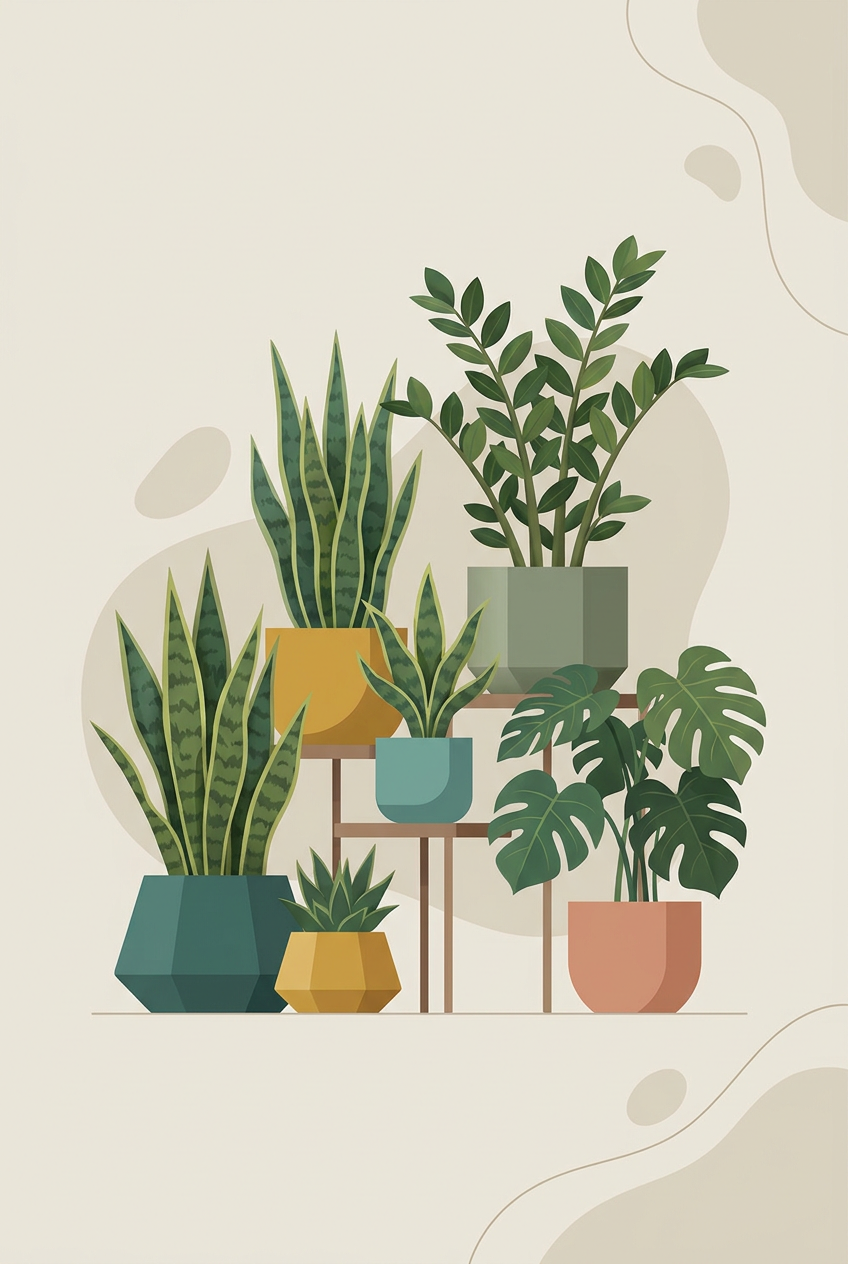
The best indoor plants for low light are the Snake Plant, ZZ Plant, and Golden Pothos, as they are exceptionally tolerant of shady conditions and require minimal direct sun. These hardy plants can flourish in rooms with north-facing windows or in dim corners far from a light source. They are known for their resilience and ability to maintain healthy foliage with very little maintenance.
Choosing plants adapted to low light allows you to introduce life and color into spaces previously considered inhospitable for greenery. From dark hallways to basement offices, the right plant can transform a gloomy spot. These species purify the air, boost mood, and add a touch of nature without demanding a prime, sunny windowsill location.
This guide details the top plants for low-light environments in 2026, explains how to define "low light" in your own home, and provides crucial care tips to ensure your plants don't just survive, but truly thrive. We'll cover everything from watering schedules to troubleshooting common issues.
What Exactly Counts as 'Low Light' for Plants?
Before you choose a plant, it's critical to understand what "low light" means in a practical sense. Low light is an area where a plant receives indirect, gentle light for a few hours a day, but no direct sunbeams touch its leaves. It's often misunderstood, as no photosynthetic plant can survive in no light.
Think of it this way: if the space is bright enough for you to comfortably read a book during the day without turning on a lamp, it's likely a low-to-medium light environment.
Common Low-Light Scenarios:
- North-facing windows: These offer the most consistent but least intense natural light throughout the day.
- Rooms with obstructed windows: A window facing a nearby brick wall, a large tree, or a covered porch will provide low light.
- Interior spaces: Hallways, corners of large rooms, or office cubicles that are 10+ feet away from any window.
- Basements: Basements with small or high-up windows often qualify as low-light zones.
A quick test: Hold your hand a foot over the spot where you want to place a plant. If it casts a soft, blurry shadow, it's low light. If the shadow is faint or nonexistent, it may be too dark. If the shadow is sharp and defined, that's direct light.
The 15 Best Indoor Plants for Low Light in 2026
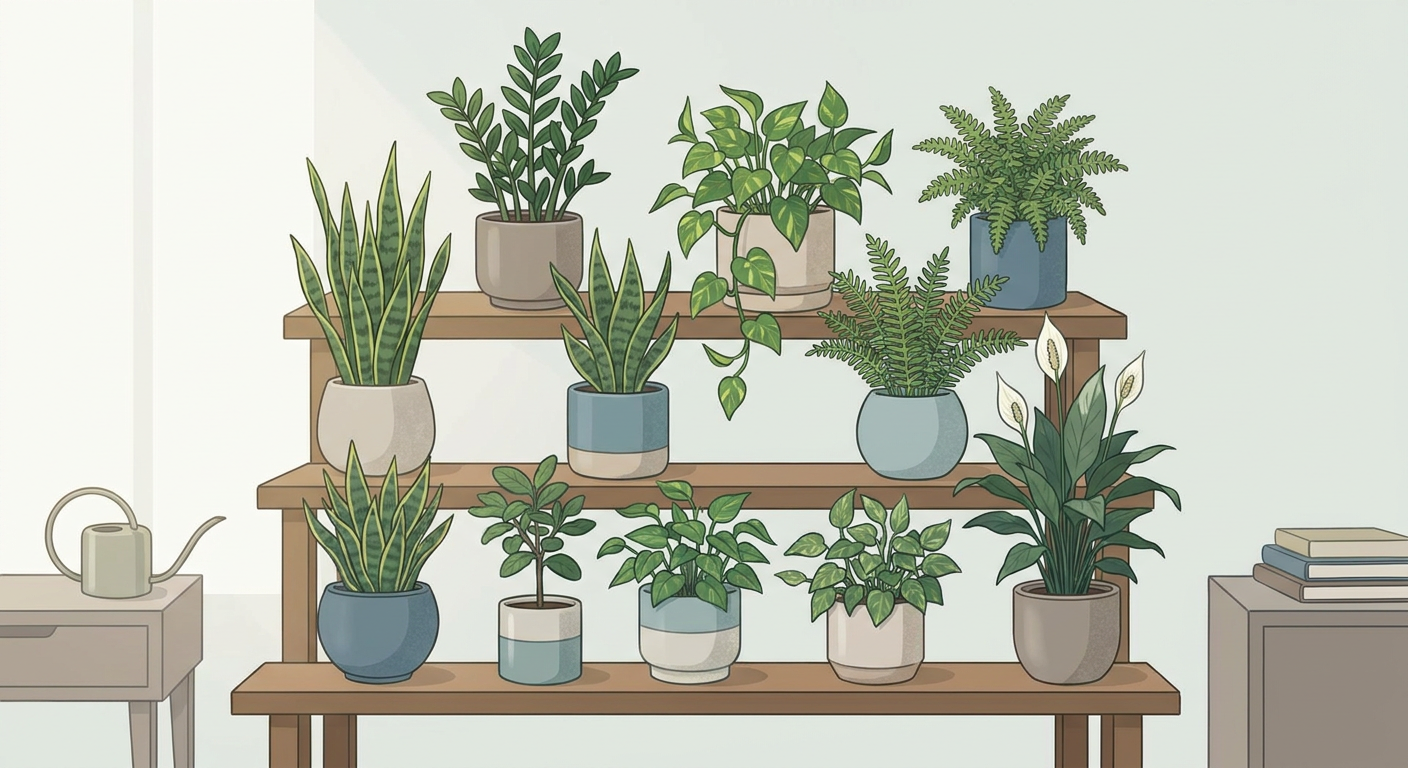
These plants have proven their durability and beauty in less-than-ideal lighting. They are the go-to choices for beginners and seasoned plant parents looking to greenify darker spaces.
1. Snake Plant (Dracaena trifasciata)
The undisputed champion of low-light tolerance and neglect. Its stiff, upright leaves store water, making it extremely drought-resistant. The Snake Plant is also a top-rated air purifier.
- Care: Water only when the soil is 100% dry (every 3-6 weeks). It will rot if overwatered.
2. ZZ Plant (Zamioculcas zamiifolia)
Almost as indestructible as the Snake Plant, the ZZ Plant features glossy, dark green leaves on graceful, arching stems. It thrives on neglect and can tolerate very low light levels, making it perfect for office environments.
- Care: Water sparingly, allowing the soil to dry out completely. Tolerates inconsistent watering schedules.
3. Golden Pothos (Epipremnum aureum)
This vining plant is incredibly versatile. You can let its heart-shaped leaves trail down from a hanging basket or encourage it to climb. While it will lose some of its golden variegation in low light, it will remain healthy and green.
- Care: Water when the top 1-2 inches of soil feel dry. It's very forgiving if you forget.
4. Cast Iron Plant (Aspidistra elatior)
Named for its near-indestructible nature, this plant can handle deep shade, temperature fluctuations, and infrequent watering. Its large, dark green leaves add a bold, tropical feel to any room.
- Care: Keep the soil lightly moist, but it can tolerate periods of dryness. Clean leaves with a damp cloth to keep them glossy.
5. Lucky Bamboo (Dracaena sanderiana)
Often grown directly in water, Lucky Bamboo is not true bamboo but is a fantastic choice for low-light spots. It brings a touch of Zen and is believed to bring good fortune.
- Care: If in water, change the water weekly. If in soil, keep the soil consistently moist.
6. Peace Lily (Spathiphyllum wallisii)
One of the few plants that will reliably flower in lower light, the Peace Lily produces elegant white spathes. It's also known for "dramatically" drooping when it needs water, taking all the guesswork out for you.
- Care: Water thoroughly when the plant starts to droop. Prefers higher humidity.
7. Parlor Palm (Chamaedorea elegans)
A classic Victorian-era houseplant, the Parlor Palm is a small, slow-growing palm that does exceptionally well in lower light. It creates a lush, feathery texture and is non-toxic to pets.
- Care: Water when the top inch of soil is dry. Avoid overwatering.
8. Aglaonema (Chinese Evergreen)
With stunning variegated leaves in shades of silver, red, and pink, you might assume Aglaonema needs bright light. However, the greener varieties are surprisingly adept at handling low-light conditions.
- Care: Let the top 2 inches of soil dry out between waterings.
9. Heartleaf Philodendron (Philodendron hederaceum)
Very similar in appearance and care to the Golden Pothos, this philodendron has classic, heart-shaped leaves and a vining habit. It's incredibly forgiving and communicates its needs clearly.
- Care: Water when the top inch of soil is dry. Yellowing leaves often mean too much water.
10. Spider Plant (Chlorophytum comosum)
While Spider Plants prefer brighter, indirect light to produce their signature "spiderettes" (baby plants), they tolerate low light quite well. Their arching leaves create a fountain-like effect.
- Care: Water regularly, keeping the soil lightly moist. They are sensitive to fluoride in tap water.
11. Dracaena 'Janet Craig' (Dracaena deremensis)
This variety of Dracaena features solid, deep green leaves and a cane-like structure. It's a slow grower but is incredibly tolerant of low-light office environments, earning it the nickname "corn plant."
- Care: Water when the top half of the soil is dry.
12. Arrowhead Plant (Syngonium podophyllum)
Young Arrowhead Plants are bushy with arrow-shaped leaves. As they mature, they begin to vine. They tolerate low light well, though their coloration may be less pronounced.
- Care: Keep soil evenly moist but not waterlogged.
13. Bird's Nest Fern (Asplenium nidus)
Unlike many fussy ferns, the Bird's Nest Fern is a solid low-light contender. Its solid, wavy fronds grow from a central rosette, resembling a bird's nest. It appreciates higher humidity, making it great for bathrooms.
- Care: Keep the soil consistently moist and provide humidity. Avoid watering into the central "nest."
14. Bromeliad (Guzmania lingulata)
For a splash of long-lasting color, a Bromeliad is a surprising choice. While they need medium light to initiate their bright bracts (colorful leaves), once they bloom, the flower can last for months even in lower light.
- Care: Keep a small amount of water in the central "cup" of the plant, flushing it weekly.
15. Maidenhair Fern (Adiantum)
The most delicate on this list, the Maidenhair Fern survives in low light but demands high humidity and consistently moist soil. Its feathery, light-green foliage on black stems is stunning, but it is not a plant for the forgetful owner.
- Care: Never let the soil dry out. Perfect for a terrarium or a humid bathroom with a window.
Key Takeaways
- Top Choices: The Snake Plant, ZZ Plant, and Golden Pothos are the most resilient and adaptable indoor plants for low-light conditions.
- Define Your Light: Low light means no direct sunbeams and enough ambient light to read a book comfortably. Most plants cannot survive in a windowless room without supplemental light.
- Watering is Key: Overwatering is the #1 killer of low-light plants. Since they photosynthesize less, they use water much more slowly. Always check the soil before watering.
- Don't Expect Rapid Growth: Plants in low light will grow much more slowly than their counterparts in bright, indirect light. This is normal.
- Clean Your Leaves: Dust can block the small amount of light your plant receives. Gently wipe leaves with a damp cloth every few months to maximize light absorption.
How to Care for Low-Light Indoor Plants
Caring for plants in dim conditions requires a different approach. Since they have less energy from light, their other needs (water, fertilizer) are also reduced.
Watering: Less is More
This is the golden rule. In low light, photosynthesis slows down, and plants transpire less. Consequently, their need for water drops significantly.
- Check the Soil: Always stick your finger 1-2 inches into the soil. If you feel any moisture, wait.
- Learn Your Plant: Drought-tolerant succulents like the Snake Plant and ZZ Plant need to dry out completely. Leafy tropicals like the Peace Lily prefer to stay more consistently moist (but not soggy).
- Water Thoroughly, But Infrequently: When you do water, soak the soil completely until water runs out of the drainage hole. Then, let it dry out to the appropriate level for that specific plant.
Soil and Potting
Good drainage is non-negotiable for low-light plants. Because the soil stays wet longer, a well-draining pot and soil mix are essential to prevent root rot. Use a standard indoor potting mix amended with perlite or orchid bark to increase aeration. Ensure your pot has at least one drainage hole.
Fertilizer Needs
Low-light plants are not heavy feeders. Their slow growth means they use nutrients at a snail's pace.
- Frequency: Fertilize only during the growing season (spring and summer).
- Strength: Use a balanced liquid fertilizer diluted to half-strength.
- Schedule: Applying it once every 6-8 weeks is plenty. Never fertilize in the fall or winter.
Low-Light vs. No-Light: A Critical Distinction
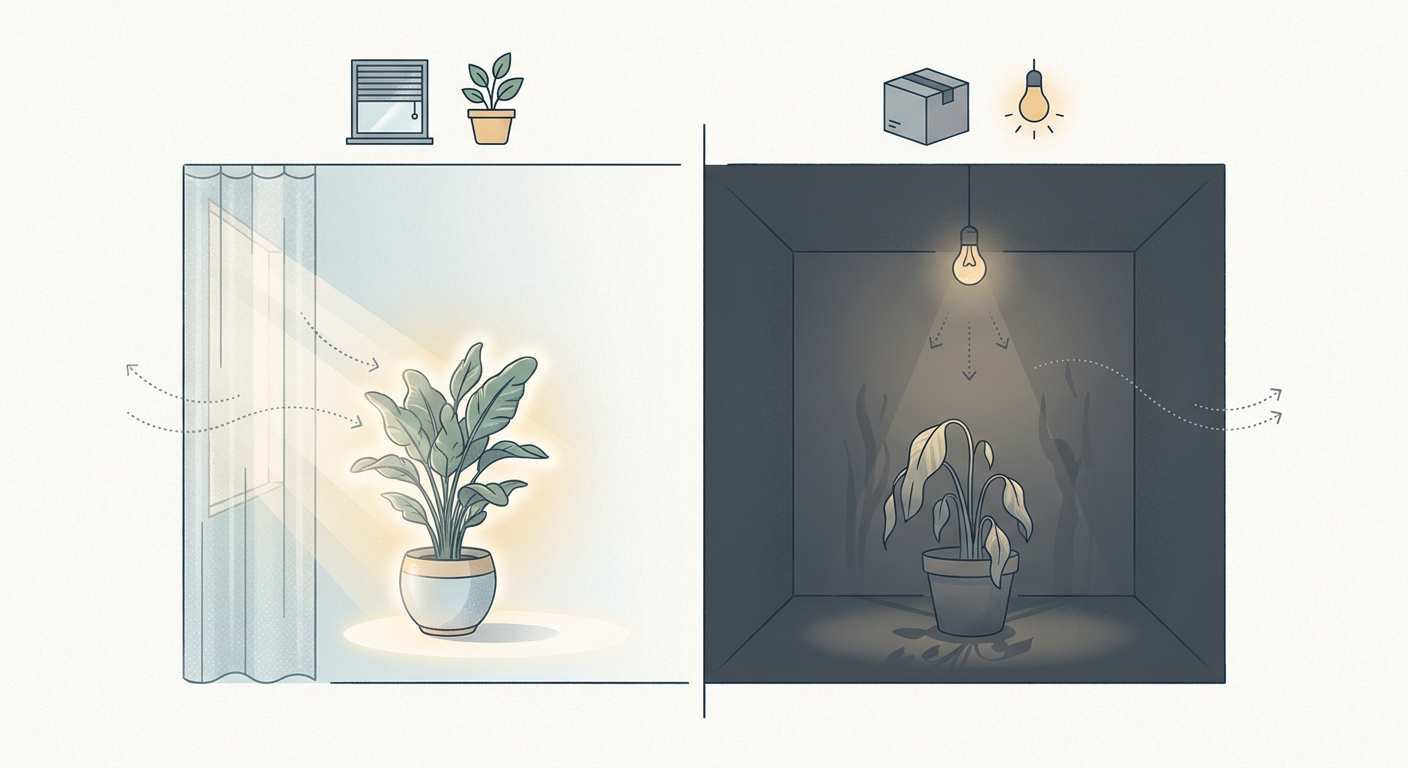
It's a common and fatal mistake to believe "low-light tolerant" means "no-light tolerant." All plants on this list require some level of natural or artificial light to photosynthesize and survive.
A windowless bathroom, a stairwell with no windows, or a basement office far from any light source is a no-light environment. A plant placed here will slowly starve to death over a period of weeks or months.
If you want a plant in a no-light space, you must provide a supplemental light source. A simple full-spectrum LED grow light bulb in a standard desk lamp, set on a timer for 8-10 hours a day, is enough to keep a low-light plant healthy.
Signs Your Low-Light Plant Isn't Happy
Your plants will tell you what they need. Watch for these common signs.
- Yellowing Leaves: This is most often a sign of overwatering. The soil is staying too wet, suffocating the roots.
- Leggy Growth: The plant is stretching towards a light source, resulting in long, thin stems with sparse leaves. This means it needs more light. Try moving it closer to a window.
- Leaning: The entire plant is bending in one direction. It's desperately trying to get closer to its light source. Rotate the plant 90 degrees every time you water to encourage even growth.
- Loss of Variegation: Variegated plants (like some Pothos or Aglaonema) may revert to solid green. This is a survival mechanism to maximize the chlorophyll in their leaves to capture more light. It's not harmful, but it indicates the light is very low.
Best Low-Light Plants Compared: Quick Care Guide
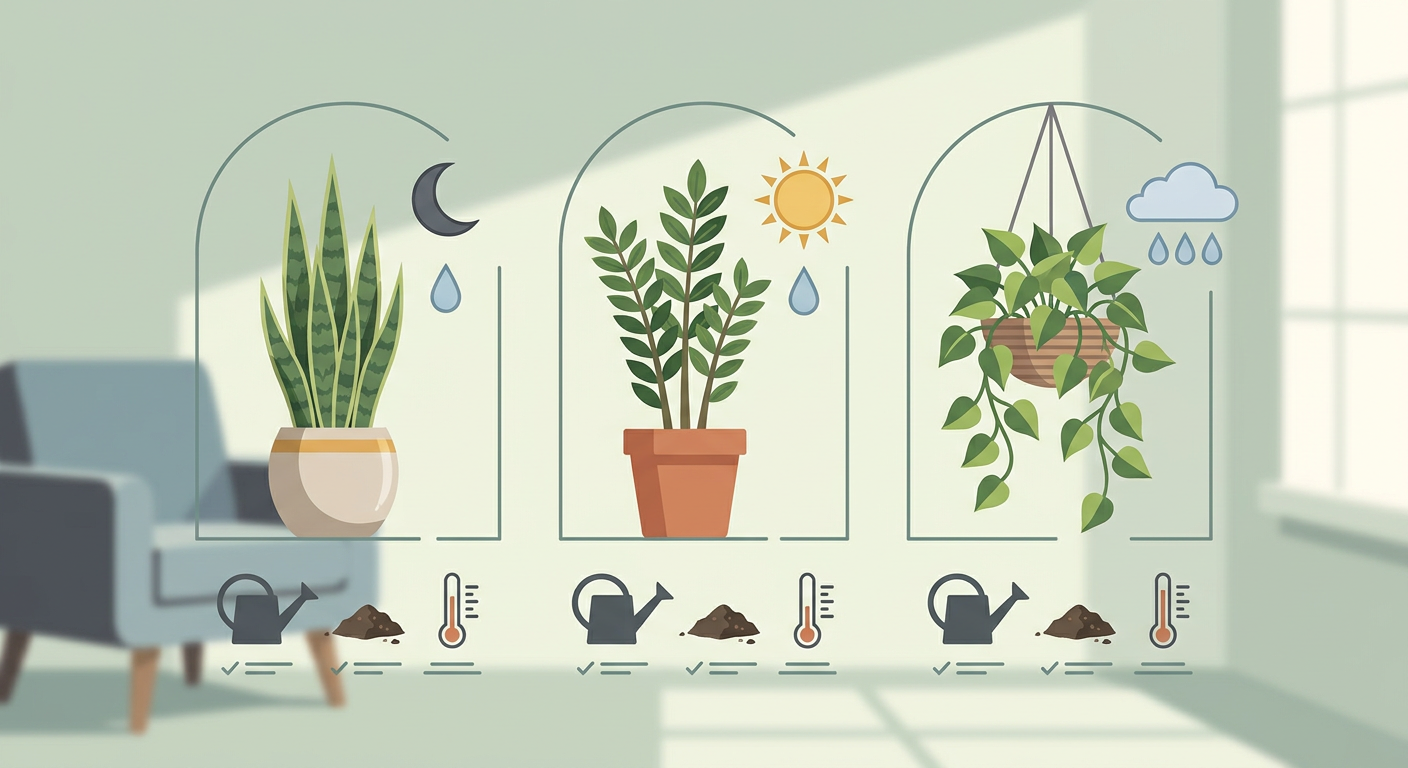
| Plant Name | Water Needs | Light Tolerance | Key Trait |
|---|---|---|---|
| Snake Plant | Very Low (let soil dry completely) | Excellent (tolerates near-shade) | Almost indestructible, air-purifying |
| ZZ Plant | Very Low (let soil dry completely) | Excellent (tolerates near-shade) | Extremely drought-tolerant, glossy leaves |
| Golden Pothos | Medium (top inch dry) | Excellent (will lose variegation) | Fast-growing vine, very forgiving |
| Peace Lily | High (keep soil moist) | Good (will flower in low light) | "Droops" to tell you it's thirsty |
| Cast Iron Plant | Low-Medium (can dry out) | Excellent (thrives in deep shade) | Extremely hardy, handles neglect well |
| Parlor Palm | Medium (top inch dry) | Good (prefers no direct sun) | Pet-safe, classic elegant look |
Frequently Asked Questions
Can I put a Snake Plant in a bathroom with no windows?
No plant can survive long-term in a room with zero natural light without a grow light. While a Snake Plant might last for a few months in these conditions, it will eventually decline. It's best to add a small LED grow light.
What's the best flowering plant for low light?
The Peace Lily (Spathiphyllum) is the most reliable flowering plant for low-light conditions. While its flower production may be less frequent than in brighter light, it will still produce its signature white blooms. Some Bromeliads also hold their colorful bracts for months in low light.
Why are my Pothos leaves turning yellow?
The most common cause of yellowing leaves on a Pothos, especially in a low-light setting, is overwatering. The soil is not drying out quickly enough between waterings. Reduce your watering frequency and ensure the pot has good drainage.
How often should I fertilize my low-light plants?
Fertilize them sparingly. A half-strength Vdilution of a balanced liquid fertilizer once every 6-8 weeks during the spring and summer is sufficient. Do not fertilize at all during the fall and winter when growth is dormant.
Are low-light plants safe for cats and dogs?
Some are, but many are not. The Parlor Palm, Spider Plant, Cast Iron Plant, and Bird's Nest Fern are all non-toxic and pet-safe. However, the Snake Plant, ZZ Plant, Pothos, and Peace Lily are toxic if ingested and should be kept away from pets.
Adding greenery to the dimmest corners of your home is entirely possible with the right plant selection. By understanding that "low light" doesn't mean "no light" and adjusting your care routine—especially your watering habits—you can successfully cultivate a lush indoor garden. These resilient plants prove that you don't need perfect, sunny windows to enjoy the benefits and beauty of nature indoors.