Intermittent Fasting for Beginners: Your 2026 Guide
Intermittent fasting for beginners is an eating schedule that cycles between periods of eating and voluntary fasting, not a diet that dictates specific foods. The core principle is focusing on when you eat, rather than what you eat. For those just starting, this typically involves simple, manageable schedules like a 12-hour fast followed by a 12-hour eating window.
This approach has surged in popularity not as a complex diet craze but as a flexible lifestyle tool supported by growing scientific research. Many people adopt it for benefits ranging from weight management and improved metabolic health to sheer simplicity. By creating structured eating windows, you can potentially simplify your day and reduce decision fatigue around meals.
This definitive 2026 guide will walk you through everything you need to know. We’ll cover the most effective fasting methods for beginners, a step-by-step plan to get started, common pitfalls to avoid, and the science behind how it all works. You'll finish this article with the confidence to start your journey safely and effectively.
What Exactly Is Intermittent Fasting?
Intermittent fasting (IF) is an umbrella term for various eating patterns that involve designated periods of not eating (fasting). Unlike traditional diets that focus on calorie restriction 24/7, IF organizes your day or week into "eating windows" and "fasting windows." During the fasting window, you consume no calories; during the eating window, you consume your regular daily nutrition.
Think of it less as a diet and more as time-restricted eating. It’s a conscious decision to give your digestive system a prolonged break. This isn't about starvation; it's about scheduling. The human body is well-equipped to handle periods without food, a trait that dates back to our hunter-gatherer ancestors who didn't have access to three square meals a day.
The focus is entirely on timing. You could eat the exact same amount of food you do now, but by consuming it within a more condensed timeframe, you unlock different metabolic processes in your body.
How Does Intermittent Fasting Actually Work?
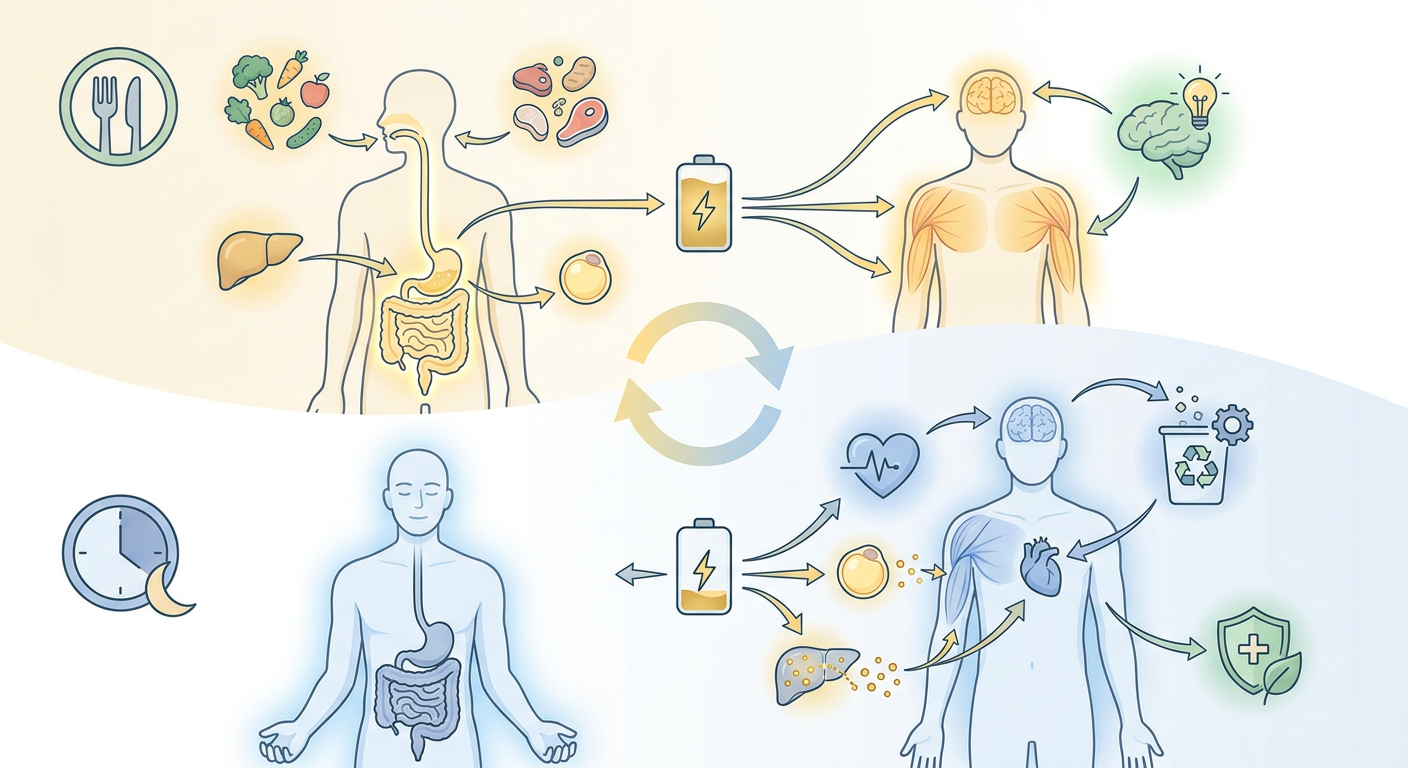
Intermittent fasting works by triggering a metabolic switch in your body. When you eat, your body uses glucose (from carbohydrates) as its primary source of energy, and your insulin levels are elevated. But after about 10–12 hours of fasting, your accessible glucose stores are depleted.
With no new glucose coming in, your body is forced to find an alternative fuel source. This is where the magic happens:
- Insulin Levels Drop: Without a constant intake of food, your insulin levels fall significantly. Lower insulin is a powerful signal to the body to start burning stored body fat for energy instead of glucose.
- Metabolic Switching: Your body shifts from a state of using glucose for fuel to burning fat. This fat-burning state is known as ketosis, though the depth of ketosis varies depending on the length of the fast.
- Cellular Repair (Autophagy): Longer periods of fasting trigger a process called autophagy. This is your body's cellular cleanup crew at work. During autophagy, your cells clear out old, damaged proteins and components, recycling them for energy or to build new, healthier cells. This process is fundamental to cellular health and longevity and is a key area of research in 2026.
Essentially, IF gives your body a break from the constant work of digestion and allows it to focus on maintenance, repair, and burning stored fat.
Key Takeaways for Your IF Journey in 2026
- Start Slow: Don't jump into an 18-hour fast on day one. Begin with a 12:12 or 14:10 schedule to let your body adapt.
- Hydration is Non-Negotiable: Drink plenty of water, black coffee, or unsweetened herbal tea during your fast to stay hydrated and manage hunger.
- Focus on Nutrient-Dense Food: The quality of your food matters. Break your fast with balanced meals rich in protein, healthy fats, and fiber to feel your best.
- Listen to Your Body: Dizziness, extreme fatigue, or persistent headaches are signals to stop. IF should feel empowering, not punishing. Adjust your schedule as needed.
- It's a Tool, Not a Magic Bullet: Intermittent fasting works best when combined with a healthy diet, regular exercise, and adequate sleep.
- Consistency Over Perfection: If you have a social event and need to break your fast early, don't worry. Just get back on track with your next scheduled fast.
Best Intermittent Fasting Schedules for Beginners
When you're starting, simplicity is key. The most successful beginners choose a method that fits their lifestyle and feels sustainable. Here are the top three methods recommended for beginners in 2026.
The 14:10 Method: The Ideal Starting Point
The 14:10 method is arguably the best schedule for true beginners. It involves a 14-hour fast and a 10-hour eating window. This is only slightly longer than a natural overnight fast and is very easy to adopt.
- Example: You could finish dinner by 8 PM and then not eat again until 10 AM the next day. This gives you a generous 10-hour window (10 AM to 8 PM) to fit in your meals.
- Why it's great for beginners: It requires minimal adjustment and helps your body adapt to the idea of a fasting window without causing significant hunger or stress.
The 16:8 Method (Leangains): The Most Popular Choice
The 16:8 method is the most popular form of intermittent fasting. It involves a 16-hour fast and an 8-hour eating window. Many people find this schedule to be the sweet spot for seeing results without being overly restrictive.
- Example: Skip breakfast and have your first meal at 12 PM. You would then finish your last meal by 8 PM. Your eating window is from 12 PM to 8 PM.
- Why it's great: It's long enough to trigger significant metabolic benefits like fat burning but short enough to fit two or three solid meals into your eating window. It's also easy to manage socially.
The 5:2 Diet: For a Different Approach
The 5:2 diet involves eating normally for five days a week and severely restricting calories on two non-consecutive days. On the two "fasting" days, you consume only about 500–600 calories.
- Example: You eat normally on Monday, Wednesday, Friday, Saturday, and Sunday. On Tuesday and Thursday, you eat just two small meals totaling around 500 calories.
- Why it's a good option (with caution): Some people prefer the flexibility of not having to fast every day. However, tracking calories and dealing with a full day of very low energy can be more challenging for beginners than time-restricted methods like 16:8.
A Step-by-Step Guide to Starting Intermittent Fasting
Ready to begin? Follow these five simple steps for a smooth and successful start.
- Choose Your Beginner Method: Review the schedules above. The 14:10 method is the safest bet for your first week. You can easily graduate to 16:8 once you feel comfortable. Don't overcomplicate it.
- Plan Your First Week: Look at your calendar. Pick a start day. Decide on your eating window. For a 14:10 schedule, an 8 PM to 10 AM fast is a great start. This mostly involves finishing dinner on time and having a slightly later breakfast.
- Stay Aggressively Hydrated: During your fasting window, hunger pangs are common initially. Most are fleeting and can be managed with a glass of water, a cup of black coffee, or herbal tea. Dehydration can be mistaken for hunger.
- Break Your Fast Gently: Don't break your fast with a massive, carb-heavy meal. This can cause a spike in blood sugar and leave you feeling sluggish. Instead, start with a balanced meal containing protein, healthy fats, and fiber. A good option is some grilled chicken with avocado and a leafy green salad.
- Listen and Adjust: Pay close attention to your body's signals during the first two weeks. Some light hunger is normal, but feeling weak, dizzy, or getting persistent headaches is not. If you're struggling, shorten your fasting window. You can always increase it again later.
16:8 vs. 5:2: Which Method Is Right for You?
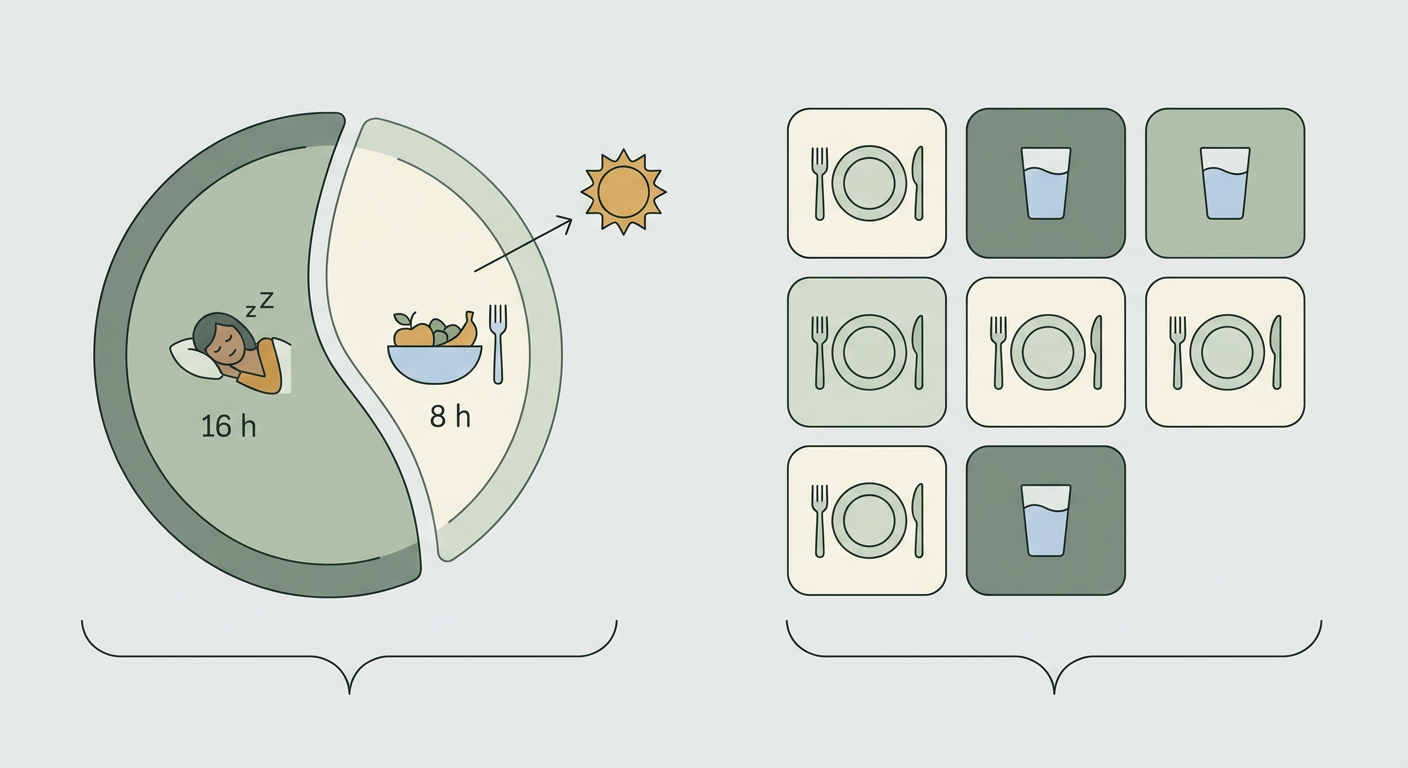
Choosing between the two most popular approaches can be tough. This table breaks down the key differences to help you decide.
| Feature | The 16:8 Method | The 5:2 Method |
|---|---|---|
| Structure | Eat within an 8-hour window every day. Fast for 16 hours every day. | Eat normally 5 days a week. Eat ~500-600 calories on 2 non-consecutive days. |
| Main Challenge | Skipping a meal (usually breakfast) and resisting late-night snacking. | Enduring two full days of very low-calorie intake and potential hunger/low energy. |
| Difficulty for Beginners | Lower. It builds a consistent daily habit and is easier to adapt to. | Higher. Requires calorie counting and can be mentally taxing on fasting days. |
| Social Impact | Moderate. Social dinners are usually fine, but breakfast meetings can be tricky. | Potentially higher flexibility on normal days, but fasting days can disrupt social plans. |
| Best For | Individuals who prefer routine, want to build a daily habit, and dislike calorie counting. | Individuals who prefer more freedom on most days and don't mind a couple of highly restrictive days. |
For most beginners in 2026, the 16:8 method (or its sibling, 14:10) is the recommended starting point due to its simplicity and consistency.
What Can You Eat and Drink While Fasting?
The rule for the fasting window is simple: zero calories. Consuming calories, particularly from sugar or protein, will raise insulin and break your fast.
Allowed During Your Fast:
- Water: Plain or sparkling. This should be your go-to.
- Black Coffee: No sugar, cream, milk, or artificial sweeteners. A splash of milk is a gray area, but for best results, keep it black.
- Unsweetened Tea: Herbal teas, green tea, and black tea are all excellent choices. Again, no sugar or milk.
- A Pinch of Salt: If you feel dizzy or have a headache, especially in hot weather, adding a small pinch of sea salt to your water can help with electrolytes.
Strictly Avoid During Your Fast:
- Juice, soda, and any sweetened beverages.
- Milk or cream in your coffee/tea.
- "Zero-calorie" drinks with artificial sweeteners can sometimes trigger an insulin response in some individuals. It's best to avoid them initially.
- Bone broth (contains calories).
- Gummy vitamins (contain sugar).
Common Mistakes Beginners Make (And How to Fix Them)
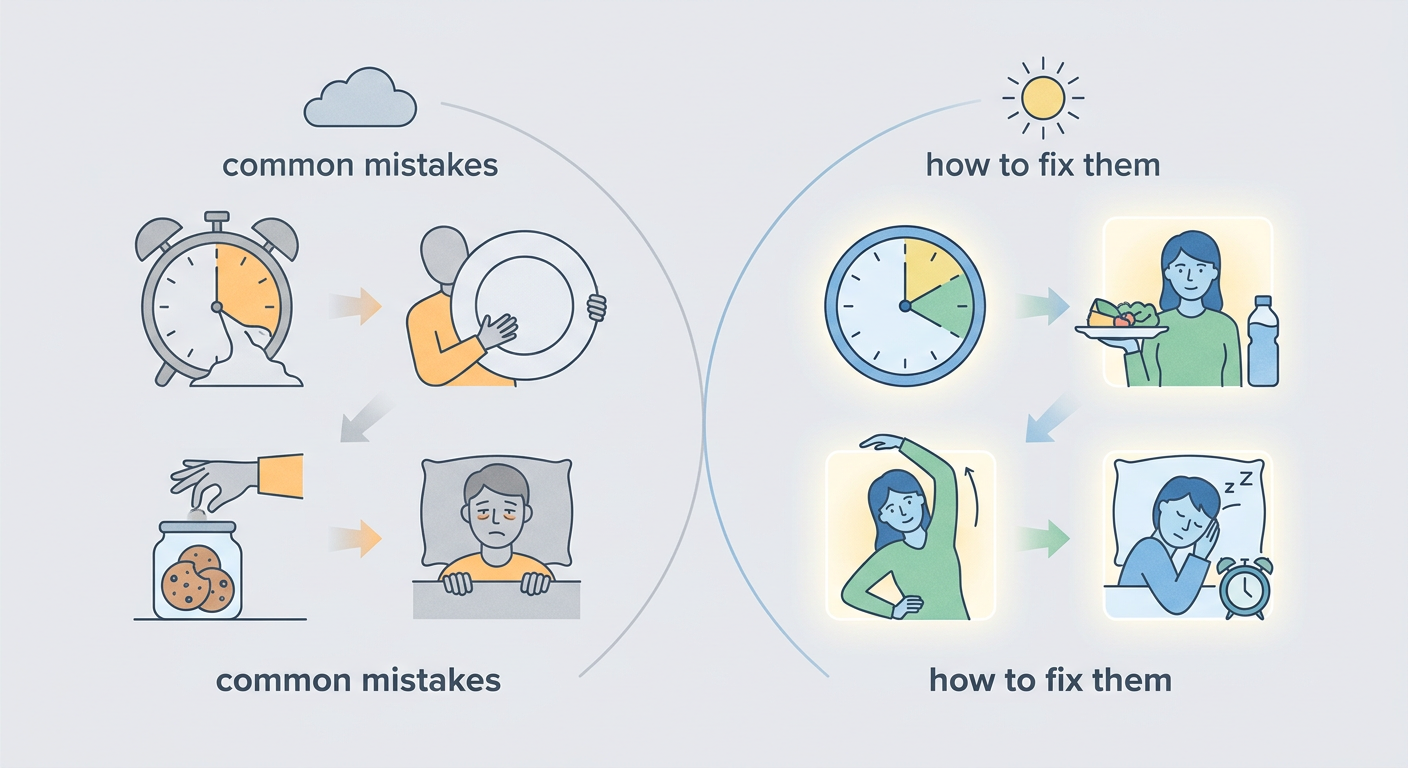
Avoid these common pitfalls to make your transition into intermittent fasting much smoother.
Mistake 1: Diving in Too Fast
Starting with an aggressive 20-hour fast is a recipe for failure. Your body needs time to adapt to using fat for fuel.
- The Fix: Start with a 12 or 14-hour fast for the first week. Gradually increase your fasting window by 30-60 minutes every few days as you feel comfortable.
Mistake 2: Ignoring Hydration
Forgetting to drink water is easy when you're not eating. This leads to headaches, fatigue, and intense hunger pangs.
- The Fix: Keep a water bottle with you at all times. Set reminders on your phone if you have to. Try herbal tea or black coffee to keep things interesting.
Mistake 3: Bingeing During Your Eating Window
Some people see the eating window as a free-for-all, eating junk food and excessive portions. This can negate the health benefits and even lead to weight gain.
- The Fix: Plan your meals. Prioritize protein, healthy fats, and fiber. These nutrients will keep you full and satisfied. Remember, IF works best when you're still eating a healthy, whole-foods-based diet.
Mistake 4: Not Eating Enough
Conversely, some beginners are afraid to eat enough calories in their shorter window, leading to nutrient deficiencies and fatigue.
- The Fix: Don't be afraid to eat until you are full and satisfied during your eating window. If you struggle to fit in enough food, consider adding nutrient-dense items like nuts, seeds, and avocados.
Frequently Asked Questions (FAQ)
Will I lose muscle while intermittent fasting?
It's a common concern, but significant muscle loss is unlikely, especially with shorter fasts like 16:8. To preserve muscle, ensure you eat enough protein during your eating window and incorporate some form of resistance training into your weekly routine. Your body preferentially burns fat before muscle.
Can I exercise while fasting?
Yes, you can absolutely exercise. Many people enjoy light to moderate cardio, like walking or jogging, in a fasted state. For high-intensity workouts, some people perform better after breaking their fast. The best advice is to listen to your body and see what feels right for you.
Is intermittent fasting different for women?
Yes, it can be. Women's bodies are more sensitive to hormonal shifts, and long fasting periods can potentially affect the menstrual cycle. It is highly recommended that women start with shorter fasts (12-14 hours) and pay close attention to their energy levels, mood, and cycle regularity.
How quickly will I see results from IF?
This varies greatly from person to person. Some people report feeling more energetic and less bloated within the first week. Noticeable weight loss may take 2-4 weeks or longer. Consistency is far more important than speed. Focus on building the habit first, and the results will follow.
What if I feel unwell during a fast?
If you feel light-headed, dizzy, nauseous, or have a severe headache, you should break your fast immediately. Have a small, balanced snack and drink some water. This is a sign you may have pushed too hard too soon. Re-evaluate your fasting length and hydration strategy.
Who should NOT try intermittent fasting?
IF is not for everyone. You should avoid it or speak with a doctor first if you: are pregnant or breastfeeding, have a history of eating disorders, are underweight (BMI < 18.5), or have certain medical conditions like type 1 diabetes.
Your Next Steps with Intermittent Fasting
Intermittent fasting in 2026 is no longer a fad; it's a well-established lifestyle strategy for improving health and simplifying life. Remember that it's a flexible tool, not a rigid prison. The best approach is the one that you can stick with consistently and that makes you feel strong and energized.
Start with a manageable schedule like 14:10, prioritize hydration, and fuel your body with nutritious food. Pay attention to the feedback your body gives you and don't be afraid to adjust. You're not aiming for perfection—you're building a sustainable habit, one fasting window at a time.