How to Make the Perfect Cup of Tea: A Science-Backed Guide
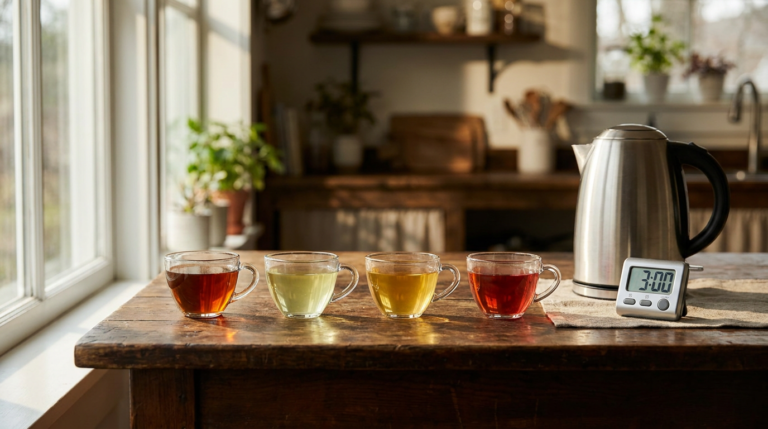
Brewing the perfect cup of tea is a beautiful harmony of culinary art and organic chemistry. To make a perfect cup of tea, steep high-quality loose leaves or a tea bag in freshly boiled, filtered water at the precise temperature designated for your tea variety (ranging from 160°F to 212°F) for exactly 2 to 5 minutes. According to chemistry research published by the Royal Society of Chemistry, using freshly drawn, filtered water prevents flat-tasting tea by preserving dissolved oxygen, which is crucial for releasing the complex flavor compounds in Camellia sinensis.
Key Takeaways
- Water quality is paramount: Always use freshly drawn, filtered water to maximize dissolved oxygen and avoid mineral interference.
- Temperature control prevents bitterness: Delicate green and white teas require cooler water (160°F-180°F), while robust black and herbal teas need boiling water (205°F-212°F).
- Steep by the clock: Over-steeping releases excess tannins, which causes astringency and bitterness.
- Add milk last: Pouring milk into hot tea prevents the milk proteins from overheating and denaturing (curdling).
- Choose the right vessel: Ceramic, glass, and bone china retain heat efficiently and do not leach unwanted chemical flavors into your brew.
Why does water quality matter for tea?
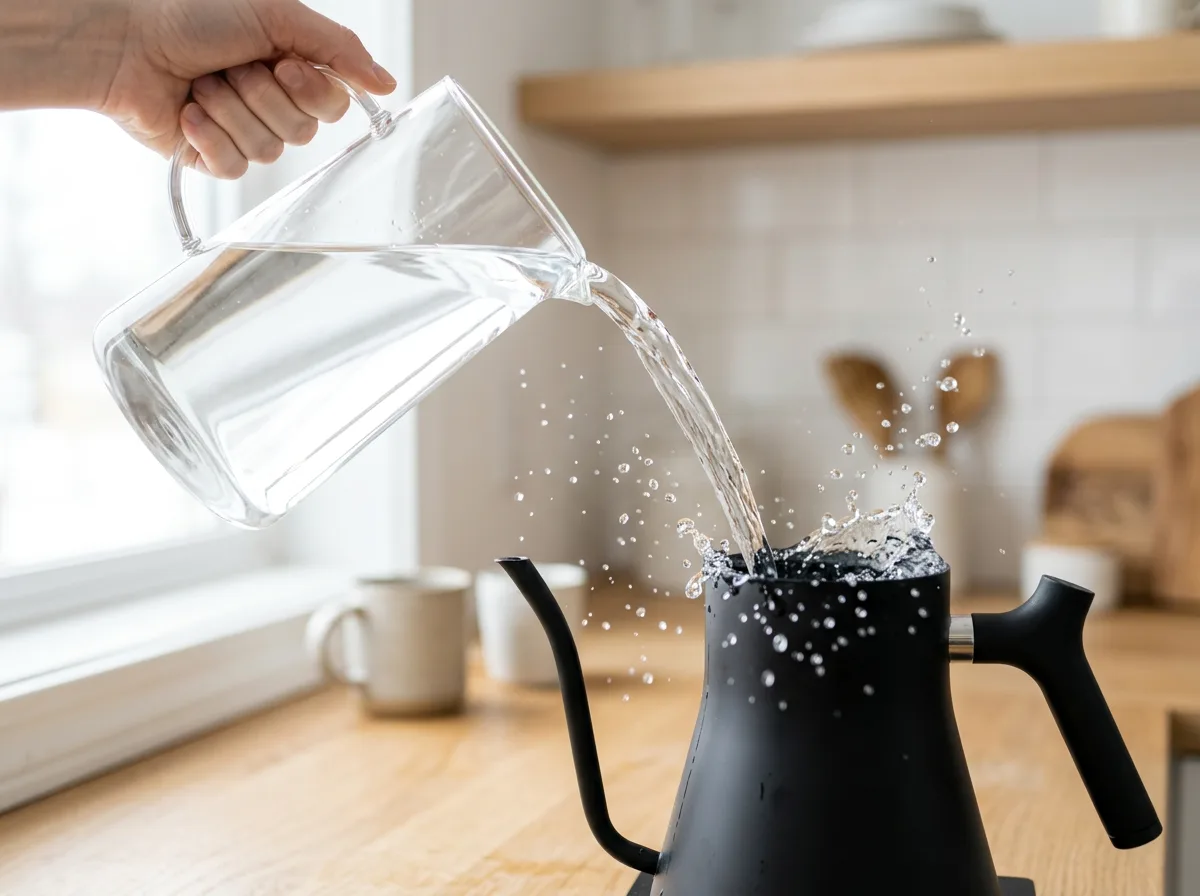
To make the perfect cup of tea, you must start with high-quality water because brewed tea is actually 99% water. The minerals and gases dissolved in your water act as the primary solvent extracting flavor compounds from the tea leaves, meaning poor water quality will directly ruin even the finest loose-leaf tea.
Using hard tap water rich in calcium and magnesium ions chemically interferes with your brew. These minerals react with the natural organic compounds in tea, particularly polyphenols, to create an insoluble, metallic-tasting film known as tea scum. According to chemist Michelle Francl in her book Steeped: The Chemistry of Tea, as reported by PBS NewsHour (2024), you can prevent this unsightly tea scum from forming by pre-warming your mug and adding a squeeze of lemon, which contains citric acid that binds to these minerals.
For the best flavor extraction, always use freshly drawn, filtered water. Fresh water contains high levels of dissolved oxygen, which is crucial for drawing out the delicate, aromatic compounds in the leaves. When you re-boil water that has already sat in your kettle, you drive out this dissolved oxygen. This leaves the water flat and stale, resulting in a dull, lifeless cup of tea that lacks complexity.
What is the perfect temperature for brewing tea?
The perfect temperature for brewing tea ranges from 165°F to 212°F (74°C to 100°C), depending entirely on the tea variety. While strong black and herbal teas thrive in boiling water, delicate green and white teas require cooler temperatures to prevent bitter, over-extracted flavors.
Every true tea originates from the leaves of the Camellia sinensis plant, which contains a complex mix of polyphenols, amino acids, caffeine, and volatile aromatic compounds. Water temperature acts as the key that releases these compounds at different speeds. Amino acids, which provide sweetness and savory umami notes, dissolve easily in cooler water. Tannins (polyphenols) and caffeine, which contribute bitterness and astringency, extract much faster at higher temperatures.
If you pour boiling water directly over delicate white or green tea leaves, you end up scorching them. This thermal shock causes the rapid, excessive release of bitter tannins, completely masking the tea’s natural sweetness. According to The Science of Steeping: Ideal Temperatures for Different Types of Tea (2025), delicate green tea should be brewed at cooler temperatures around 165°F to 185°F (74°C to 85°C) to prevent scorching the leaves, while black and herbal teas can withstand a full rolling boil up to 212°F (100°C).
Maintaining the correct temperature during the entire steeping process is equally vital. For example, adding cold milk too early ruins the extraction process. According to PBS NewsHour (2024), adding cold milk to a mug while the tea bag is still steeping lowers the water temperature prematurely, reducing caffeine and flavor extraction; milk should always be added after the tea has fully brewed.
Additionally, the vessels you use impact how heat is retained and how the chemistry of your brew behaves. In her book ‘Steeped: The Chemistry of Tea’, chemist Michelle Francl explains that pre-warming the mug and using a squeeze of lemon (citric acid) can bind minerals to prevent unsightly tea scum from forming, as reported by PBS NewsHour (2024).
| Tea Variety | Ideal Water Temperature (°F / °C) | Steeping Time (Minutes) | Flavor Profile |
|---|---|---|---|
| Black | 200°F – 212°F (93°C – 100°C) | 3 – 5 | Robust, malty, full-bodied |
| Green | 165°F – 185°F (74°C – 85°C) | 1 – 3 | Grassy, vegetal, sweet, umami |
| White | 175°F – 185°F (79°C – 85°C) | 2 – 5 | Delicate, floral, subtle |
| Oolong | 185°F – 205°F (85°C – 96°C) | 3 – 5 | Complex, fruity, woody, floral |
| Herbal | 212°F (100°C) | 5 – 10 | Bold, fruity, sweet, herbaceous |
What is the correct tea-to-water ratio?
To brew the perfect cup of tea, the correct tea-to-water ratio is 1 teaspoon (approximately 2 grams) of loose leaf tea per 6 ounces (177 ml) of water. This standard ratio ensures an optimal balance of flavor, body, and aroma, preventing your brew from tasting either painfully bitter or disappointingly weak.
The Science of Over and Under-Extraction
Sticking to this ratio is crucial because of how water extracts compounds from tea leaves. If you use too much tea, the water quickly becomes saturated, leading to over-extraction. This releases excess tannins and polyphenols, leaving you with a harsh, bitter cup. Conversely, using too little tea results in under-extraction, producing a thin, watery beverage that lacks depth.
How to Handle Tea Bags and Mugs
If you prefer the convenience of tea bags, the measuring is already done for you. Standard commercial tea bags typically contain about 2 grams of pre-measured “fannings” or “dust” (broken tea leaves). This quantity is specifically calibrated to brew one standard 6-ounce to 8-ounce mug.
However, the vessel you choose matters. Many modern household mugs hold 10 to 12 ounces of liquid. If you are using a larger mug, you will need to scale up your recipe: use two tea bags or two teaspoons of loose leaf tea to maintain the correct ratio.
Give the Leaves Room to Breathe
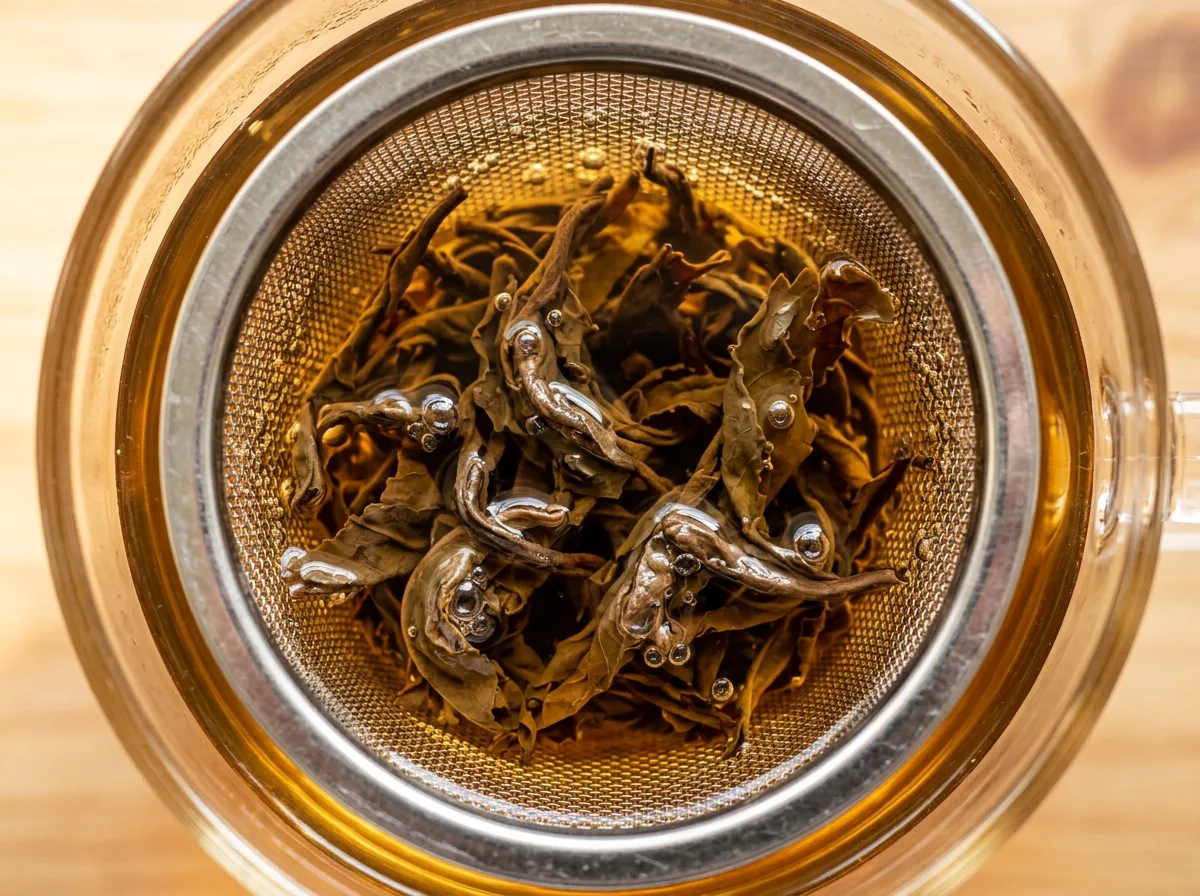
To get the most out of your loose leaves, never cram them into a tiny, restrictive metal tea ball. Tea leaves need space to expand to up to five times their dry size as they absorb water. Using a spacious, wide basket infuser allows water to circulate freely through the leaves, ensuring they fully unfurl and release their complex flavors and beneficial antioxidants.
How to brew the perfect cup step-by-step?
To brew the perfect cup of tea, you must control three critical variables: water temperature, steeping time, and vessel preparation. By pre-warming your cup, heating filtered water to your tea’s specific ideal temperature, and removing the leaves promptly after steeping, you unlock the optimal balance of flavor and aroma without bitterness.
Step 1: Warm the Vessel
Pre-warming your teapot or mug with hot water prevents the brewing water temperature from dropping instantly when it hits the container. According to chemist Michelle Francl in her book Steeped: The Chemistry of Tea, as reported by PBS NewsHour (2024), pre-warming the mug and using a squeeze of lemon (citric acid) can also bind minerals to prevent unsightly tea scum from forming on the surface. Simply swirl hot water in your vessel for 10 seconds, then discard it before brewing.
Step 2: Measure Your Tea
Place your loose tea leaves or high-quality tea bag directly into the warmed vessel. For loose-leaf varieties, a standard starting ratio is one teaspoon (approximately two grams) of tea per eight ounces of water, though you can adjust this to suit your taste preferences.
Step 3: Heat Fresh, Filtered Water
Heat fresh, filtered water to the exact temperature required for your specific tea type. According to The Science of Steeping (2025), delicate green tea should be brewed at cooler temperatures around 165°F to 185°F (74°C to 85°C) to prevent scorching the leaves, while black and herbal teas can withstand a full rolling boil up to 212°F (100°C). Avoid re-boiling water, as this depletes dissolved oxygen and results in a flat, dull-tasting brew.
Step 4: Pour and Agitate
Pour the heated water directly over the tea leaves or tea bag. This direct stream agitates the leaves gently, initiating the extraction of flavor compounds, amino acids, and beneficial antioxidants.
Step 5: Cover and Steep
Cover your teapot or mug with a lid or saucer to trap the heat and volatile aromatic oils. If you plan to add milk, wait until this process is completely finished. As documented by PBS NewsHour (2024), adding cold milk to a mug while the tea bag is still steeping lowers the water temperature prematurely, reducing caffeine and flavor extraction; milk should always be added after the tea has fully brewed.
Step 6: Halt the Extraction
Remove the tea leaves, infuser, or tea bag immediately once your timer goes off. Leaving the leaves in the water causes over-extraction, releasing heavy tannins that make your beverage bitter and astringent.
| Tea Type | Ideal Water Temperature | Recommended Steep Time |
|---|---|---|
| Green Tea | 165°F – 185°F (74°C – 85°C) | 2 – 3 minutes |
| White Tea | 175°F – 185°F (79°C – 85°C) | 2 – 4 minutes |
| Oolong Tea | 185°F – 205°F (85°C – 96°C) | 3 – 5 minutes |
| Black Tea | 200°F – 212°F (93°C – 100°C) | 3 – 5 minutes |
| Herbal Tea | 212°F (100°C) | 5 – 10 minutes |
Do you put milk in tea first or last?
To brew the perfect cup of tea, you should always put your milk in last, after the tea has fully steeped. Adding milk last prevents milk proteins from heating up too rapidly and denaturing, which can cause a subtle curdling effect and ruin the flavor profile. Pouring milk last also allows you to accurately judge the color and strength of your brew.
The debate between milk-in-first (MIF) and milk-in-last (MIL) has raged for centuries, originating from social class distinctions. Historically, those using cheap, delicate earthenware put milk in first to cool the liquid and prevent their cups from cracking. Wealthy households with fine bone china poured their tea first to show off their high-quality, heat-resistant cups.
Modern food chemistry firmly supports putting milk in last. When you pour cold milk into hot tea, the milk heats up gradually, which keeps the proteins stable. If you do the opposite—pouring hot tea directly into cold milk—the sudden, intense heat exposure can denature the whey proteins, leading to a stale, cooked-milk taste.
Furthermore, molecular interactions dictate that milk should never enter the cup during the brewing process. According to a report on Michelle Francl’s research by [PBS NewsHour] (2024-01-26), adding cold milk to a mug while the tea bag is still steeping lowers the water temperature prematurely, which significantly reduces caffeine and flavor extraction. You must let your tea leaves fully steep at their optimal temperature before introducing any dairy.
Once the tea has finished brewing and you remove the tea bag or leaves, you can add your milk. This sequence allows the milk lipids to bind smoothly with the tea tannins, softening the natural bitterness of black tea without creating an oily film. Pouring milk last also gives you complete control over the final strength, letting you adjust the color of your beverage to your exact preference.
How does your mug material affect the taste?
Your mug’s material directly affects the taste of your tea by altering heat retention, surface chemistry, and your psychological perception of flavor. For the best taste, choose non-porous materials like ceramic, glass, or bone china, which keep your tea hot and preserve its delicate aromatic oils without leaching unwanted chemical flavors.
The Thermodynamics of Ceramic, Glass, and Bone China
Ceramic, glass, and bone china are the gold standards for tea vessels because of their excellent thermal properties and inert surfaces. These materials possess high specific heat capacities, meaning they retain heat efficiently and keep your tea at its optimal drinking temperature for longer. Because they are non-porous and chemically inert, they do not absorb the tea’s volatile organic compounds—the essential oils that give tea its complex flavor profile—nor do they impart any metallic or mineral tastes.
To maximize this thermal stability, you should always pre-warm your vessel. As chemist Michelle Francl explains in her book Steeped: The Chemistry of Tea, cited by PBS NewsHour (2024), pre-warming your mug prevents the hot water’s temperature from dropping too rapidly upon pouring. Francl also notes that adding a squeeze of lemon can help bind minerals in the water to prevent unsightly tea scum from forming on the surface of your mug.
Why You Should Avoid Plastic, Styrofoam, and Paper
In contrast, plastic, paper, and styrofoam cups ruin the chemistry of a good brew. These materials are highly porous. Their rough microscopic surfaces act like sponges, absorbing the delicate essential oils and flavor compounds of the tea, which dulls the overall taste. Even worse, hot water can cause plastic and styrofoam to leach chemical compounds, microplastics, or synthetic residues directly into your beverage, introducing an artificial, plasticky taste that overpowers the tea’s natural notes.
The Tactile and Psychological Science of Drinking Tea
Beyond pure chemistry, drinking tea is a multi-sensory experience where touch influences taste. Cognitive science shows that the weight, texture, and thickness of your mug shape how your brain perceives flavor. Holding a heavy, smooth ceramic mug signals quality and comfort to your brain, which psychologically enhances your perception of the tea’s richness and warmth. Conversely, drinking from a flimsy, rough-textured paper cup or a lightweight plastic cup creates a cheap, unsatisfying tactile experience. This negative sensory feedback can make even a high-quality loose-leaf tea taste thin, flat, and unappealing.
| Mug Material | Heat Retention | Flavor Absorption | Chemical Leaching | Psychological Perception |
|---|---|---|---|---|
| Ceramic / Bone China | Excellent | None (non-porous) | None | High quality, comforting, rich |
| Glass | Moderate | None (non-porous) | None | Modern, clean, visual |
| Plastic / Styrofoam | Poor to Moderate | High (absorbs oils) | High risk at high temps | Cheap, artificial, low quality |
| Paper | Poor | High (absorbs oils) | Low (but may leach glues) | Flimsy, rushed, flat flavor |
Frequently Asked Questions
Do you put milk in tea first or last?
You should always put milk in your tea last, after the brewing process is complete. Adding milk first lowers the water temperature prematurely, which ruins the extraction of flavors and caffeine from the tea leaves.
How long should you let tea steep?
You should let tea steep for 2 to 5 minutes, depending on the specific variety of tea. Green tea requires a shorter steep of 1 to 3 minutes, while black and oolong teas benefit from 3 to 5 minutes, and herbal teas can steep for up to 10 minutes.
Why does my tea taste bitter?
Your tea tastes bitter because it has been over-extracted, which happens when you steep the leaves for too long or use water that is too hot. This thermal shock and excess steeping time releases high amounts of bitter tannins into your cup.
Can you boil water in the microwave for tea?
No, you should avoid boiling water in the microwave for tea because it heats unevenly and can easily lead to superheating, which lacks the bubbling action that helps distribute heat. A kettle is much better because it ensures a uniform temperature and preserves dissolved oxygen.
What is the perfect temperature for brewing tea?
The perfect temperature for brewing tea ranges from 165°F to 212°F (74°C to 100°C) depending on the variety. Delicate green and white teas require cooler water between 165°F and 185°F, while robust black and herbal teas brew best with fully boiling water up to 212°F.